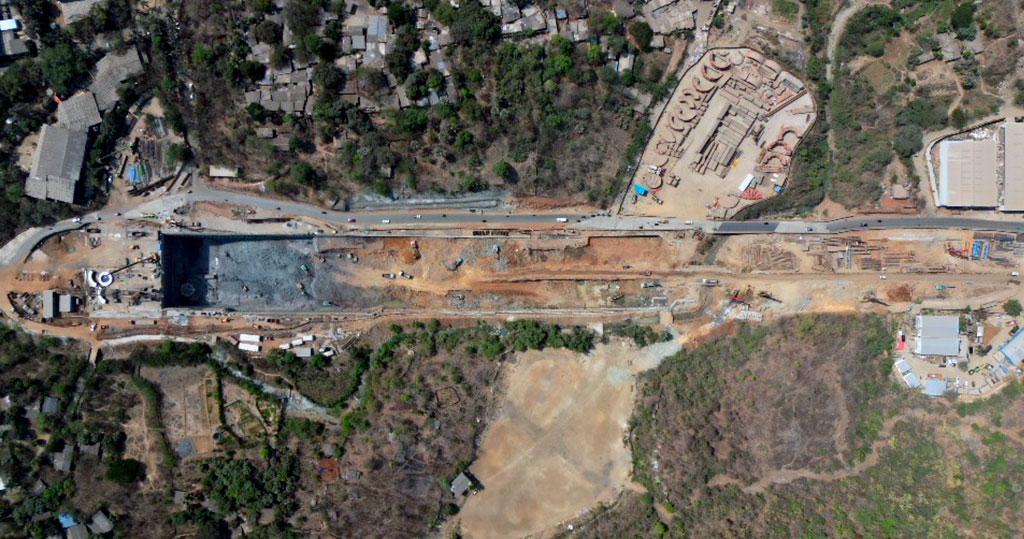
Goregaon Mulund Link Road Project
Since the end of 2024, TYPSA has been acting as Project Management Consultant (PMC) for the design, construction and operation of the twin tunnels that will connect Film City Goregaon with Khindipada (Amar Nagar) in Mulund, one of the most significant infrastructure projects on the new Goregaon Mulund Link Road (GMLR) in Mumbai, India.
The tunnels have a finished internal diameter of 13 and 14.5 metres, accommodating three lanes of traffic in each direction, as well as an emergency pedestrian walkway and integrated utility ducts, ensuring high standards of safety, operational efficiency and ease of maintenance. The design allows for a maximum operating speed of 80 km/h, balancing capacity, comfort and safety for users.
The route runs predominantly through basalt rock formations, with cover ranging between 20 and 160 m, implying a wide range of geotechnical conditions. These factors have been decisive in determining the excavation methodology, the support systems and the design of the final lining.
The tunnel portals are situated at different heights, 51 m above sea level on the Goregaon side and 33 m on the Mulund side, which has required careful control of the vertical geometry, as well as specific treatment of the transition zones between the surface and the tunnel.
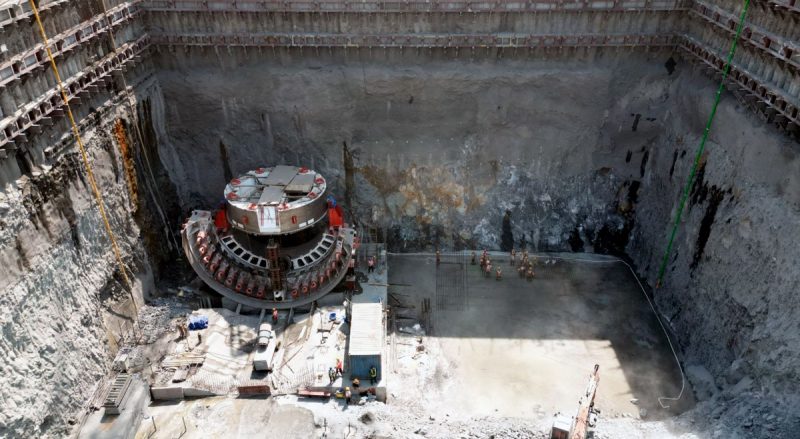
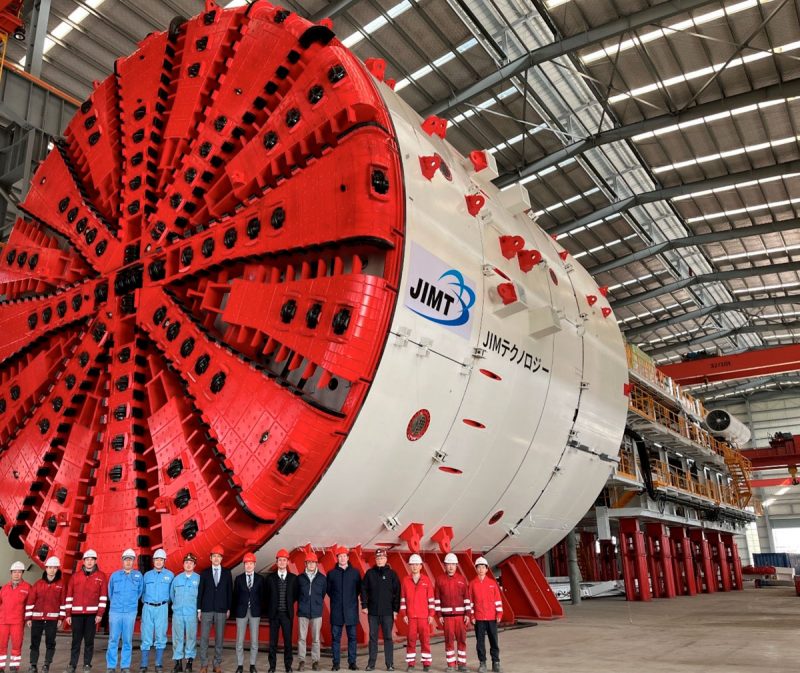
Excavation is being carried out using two newly manufactured tunnel boring machines, with a diameter and capacity suited to the design’s conditions. The final lining consists of prefabricated reinforced concrete segments, designed to meet structural, durability and fire safety requirements. In addition, connecting galleries have been included between the tubes every 300 m, with an angular geometry, to ensure evacuation and operational safety in the event of an emergency.
In addition to the excavated tunnels, the project includes significant works at surface level and on associated structures. The access roads total approximately 1.23 km, spread across the Goregaon, Mulund and Film City Gate sectors. On the Goregaon side, a further 1.44 km of box tunnels have been constructed, allowing for the gradual and functional integration of the tunnel portals with the existing road network.
In total, the length of the road infrastructure developed is approximately 13.3 km, comprising tunnels, access roads and ancillary structures, and forming a strategic corridor for urban mobility.
TYPSA plays a key role as a technical and management consultant, contributing its international experience in large-scale underground infrastructure. Its services encompass comprehensive project management, design review and assurance, contract administration and construction supervision.
During the construction phase, TYPSA conducts an in-depth review of the designs developed by the contractor, covering geotechnical, structural and construction aspects, as well as the integration of services, safety criteria and advanced digital models based on BIM and LiDAR. This work ensures the technical consistency of the project and its suitability for the actual site conditions.
Furthermore, TYPSA carries out continuous supervision of the works, ensuring compliance with quality, safety and environmental standards. Advanced quality assurance and control systems are implemented, tests and trials are supervised, and the correct execution of the works in accordance with the approved designs is guaranteed.
The safety of workers and users, protection of the environment and minimisation of disruption to the city are fundamental priorities in TYPSA’s work. Within this framework, we oversee the implementation of environmental management plans, road safety during construction and coordination with local services and authorities.
Finally, TYPSA supports the project right through to its commissioning, participating in final testing, the validation of the infrastructure and its handover in optimal operating condition, thereby contributing to the technical and functional success of a strategic infrastructure for urban mobility.
The project is currently in its initial phase, and implementation is expected to continue over the coming years, shaping an essential infrastructure for modernising mobility and sustainable development in Mumbai.