Introduction
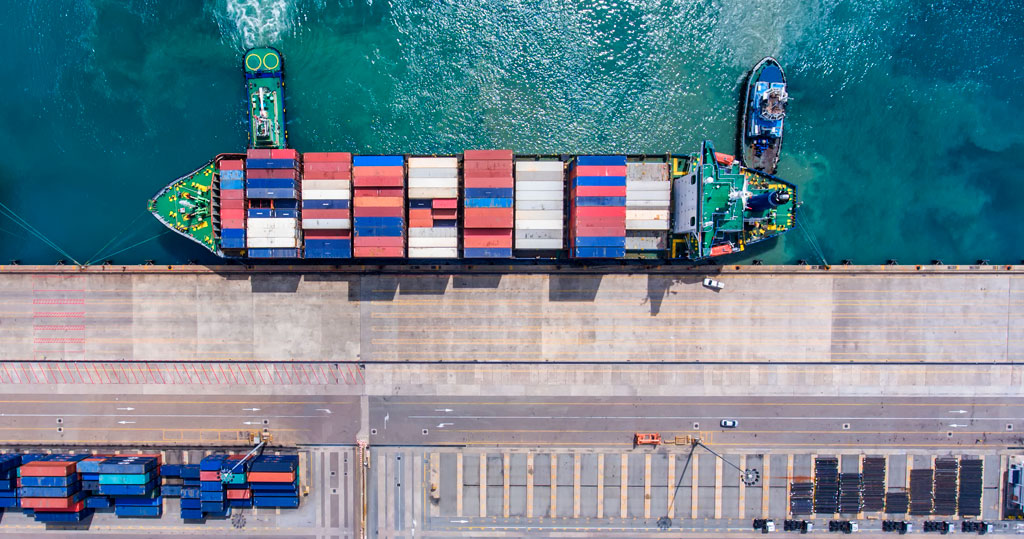
India’s sustained economic growth and its increasing integration into global trade networks have significantly intensified the demand on its port infrastructure over the past decades. In response, the Government of India has undertaken a series of strategic initiatives aimed at enhancing port capacity, improving logistics efficiency, and reducing turnaround times. Among these, Jawaharlal Nehru Port Authority (JNPA) has played a central role, emerging as the country’s largest container port and a key driver of maritime trade. However, with traffic volumes steadily increasing and physical expansion constraints becoming evident, the need for a new deep-draft port capable of handling next-generation vessels has become critical.
In this context, the development of Vadhvan Port has been conceived as a transformative infrastructure initiative on the western coast of India. Located along the Arabian Sea in Maharashtra, approximately 150 km north of JNPA, the site offers unique natural conditions, including a water depth of around 20 metres available close to the shoreline. This advantage significantly reduces the extent of capital dredging required and makes the location particularly suitable for accommodating ultra-large container vessels, thereby positioning it as a major maritime hub.
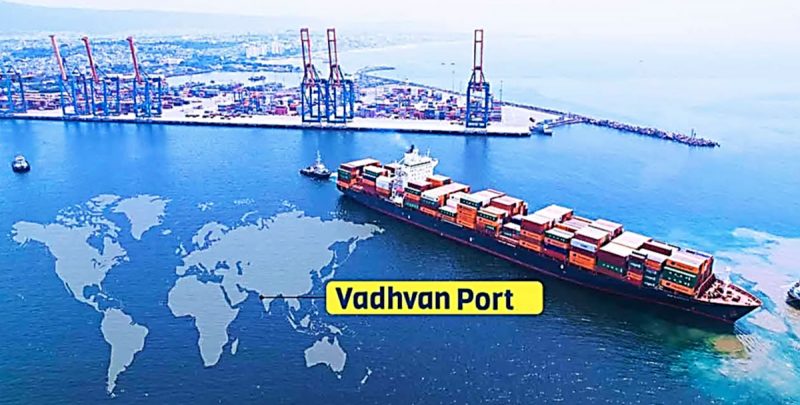
The project is being implemented by Vadhvan Port Project Limited (VPPL), a Special Purpose Vehicle promoted by JNPA in association with the Maharashtra Maritime Board. Conceived as a greenfield deep-draft port, the development is planned under a landlord model, wherein core infrastructure such as breakwaters, reclamation, and connectivity systems are developed by the authority, while private operators will undertake terminal development and operations.
The Vadhvan Port Project is being implemented through a series of coordinated engineering packages, enabling progressive capacity addition while ensuring operational efficiency and scalability. The ultimate development envisions handling nearly 500 million tonnes per annum (MMTPA) of cargo, with a dominant share of container traffic, supported by modern terminal infrastructure and integrated logistics systems.
From a technical perspective, the project includes the development of offshore reclaimed platforms, along with the construction of a long offshore breakwater, extensive land reclamation works, dredging of access channels and harbour basins, and the development of onshore infrastructure including utilities, transport networks, and operational facilities. The engineering approach emphasises optimisation of natural conditions, minimisation of environmental impact, and incorporation of advanced technologies to ensure long-term sustainability and performance.
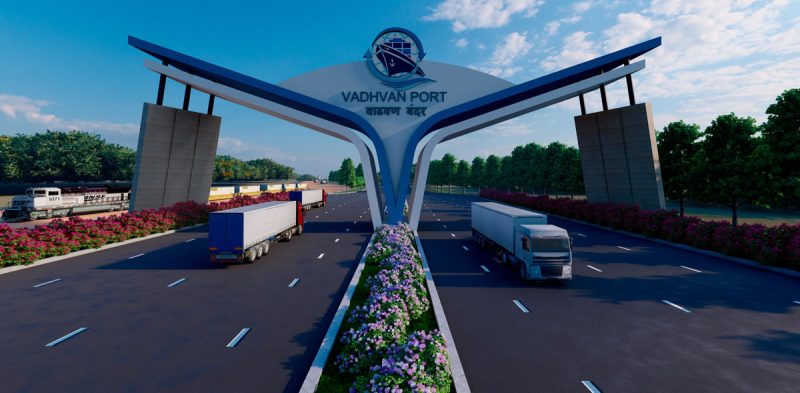
In this framework, TYPSA is actively involved in the project as General Consultant and Project Management Consultant across several key packages. The services include the review and validation of designs, preparation of tender documentation, construction supervision, contract management, and coordination among multiple stakeholders. Through its participation, TYPSA contributes to ensuring that the project is implemented in accordance with defined quality standards, timelines, and safety requirements, supporting the successful delivery of one of India’s most significant port infrastructure developments.
Development of Vadhvan Port
The development of Vadhvan Port is structured through a series of integrated engineering and infrastructure packages, designed to enable the systematic execution of marine and onshore works while ensuring coordination between multiple stakeholders. This approach allows parallel progress of critical components such as breakwater construction, reclamation, dredging, and landside infrastructure, thereby optimising construction timelines and resource utilisation.
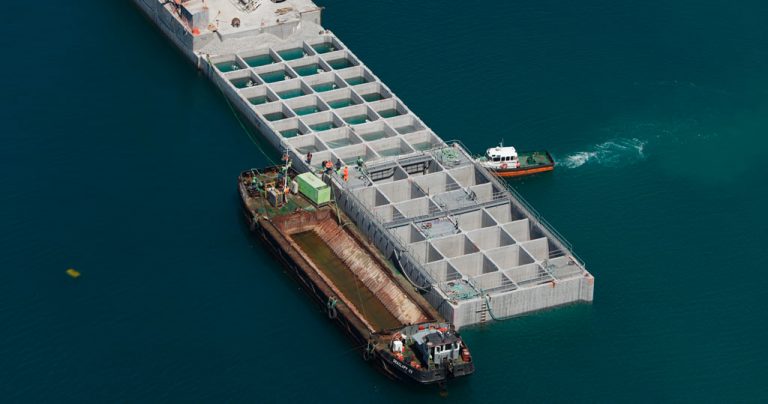
The initial set of works focuses on the creation of core marine infrastructure, primarily under the breakwater and marine access packages. These include the construction of the offshore breakwater extending approximately 10 km and approach trestles of approximately 8–9 km length, together with the development of tug berths and associated marine facilities.

In parallel, nearshore reclamation and shore protection works are undertaken to develop stable land platforms for port operations. These works involve large-scale filling, bund construction, and coastal protection measures, ensuring both structural stability and resilience against marine forces.
- Offshore breakwater and reclamation works forming the primary port platform
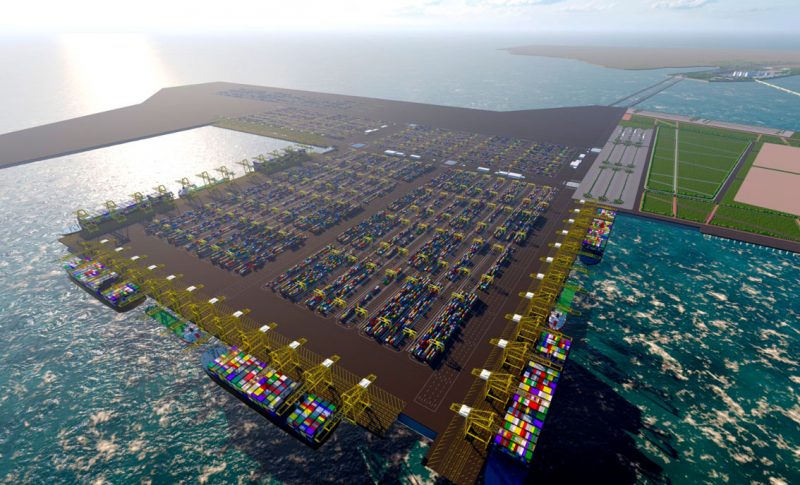
Dredging and offshore reclamation activities are executed to achieve the required depths for access channels, turning circles, and berth pockets, while also enabling the development of additional reclaimed areas for future expansion. The engineering strategy emphasises the reuse of dredged material for reclamation, optimising resource utilisation and reducing environmental impact.
As the marine and reclamation works progress, the development of onshore infrastructure is carried out to support port functionality. This includes internal road networks, operational buildings, utility systems such as water supply, sewerage, drainage, and electrical distribution, as well as other facilities required for port operations. This also includes key operational infrastructure such as port control systems, marine support facilities, and administrative buildings.
- Marine construction activities including dredging, trestle works, and harbour development
In parallel, external connectivity infrastructure is being implemented through dedicated packages by various agencies, including rail, road, water supply, and power systems. These works are essential for integrating the port with regional and national transport networks and ensuring seamless multimodal connectivity.
The package-based development approach adopted for Vadhvan Port enables flexibility in execution, allowing different components to progress simultaneously while maintaining overall integration. This methodology supports timely delivery, efficient resource deployment, and scalability for future expansion.
Engineering Solutions and Design Approach
The development of Vadhvan Port incorporates a range of engineering solutions tailored to large-scale marine infrastructure, with a focus on optimising natural site conditions, improving constructability, and minimising environmental impact. The design approach leverages the natural water depth of approximately 20 m, reducing dredging requirements while ensuring safe navigation for large vessels.
- Breakwater and Coastal Protection
The offshore breakwater, extending over approximately 10 km, is designed as a rubble mound structure to provide effective wave protection and ensure calm harbour conditions.
- Dredging and Navigation Development
Dredging works are planned to achieve the required depths for access channels, turning circles, and harbour basins. The design considers sediment characteristics and hydrodynamic behaviour, with emphasis on the reuse of dredged material for reclamation.
- Reclamation and Ground Development
Reclamation works involve the development of large reclaimed land platforms exceeding 1,400 hectares, using engineered fill and ground improvement techniques to ensure stability and performance.
- Marine Access and Structural Systems
Approach trestles and marine structures, extending over approximately 8–9 km, provide essential connectivity between offshore and onshore facilities.
- Onshore Infrastructure and Connectivity
Onshore works include internal roads, utility networks, and operational facilities designed for efficient port operations. External connectivity, including rail and road links, ensures seamless integration with regional transport networks.
Final Considerations
With the ongoing implementation of the Vadhvan Port Project across multiple packages, the development is progressing towards the creation of a world-class deep-draft port capable of handling next-generation vessels and large cargo volumes. The coordinated execution of marine works, reclamation, dredging, and onshore infrastructure is enabling the systematic development of a fully integrated port ecosystem aligned with India’s long-term maritime and logistics objectives.
The scale and complexity of the project have required the adoption of advanced engineering practices, careful planning, and continuous coordination among various stakeholders and executing agencies. The experience gained through the design review, construction supervision, and interface management of such large-scale marine infrastructure contributes significantly to strengthening technical expertise in port development and project management.
In this context, TYPSA’s involvement as General Consultant and Project Management Consultant reinforces its capability to successfully deliver complex infrastructure projects under challenging conditions. The knowledge and experience developed through this assignment further consolidate its position as a leading international consultancy in port and maritime developments.