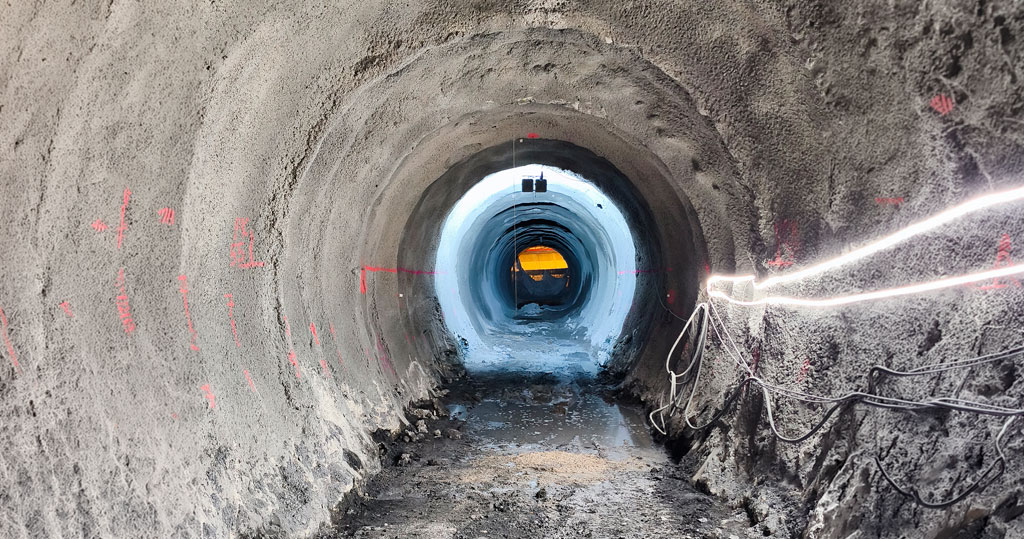
At the end of 2023, the Directorate General for Roads set itself the objective of modernising several tunnels on the A-7 dual carriageway through the province of Granada, to bring them into line with valid safety regulations. TYPSA has been responsible for supervising the works carried out in the tunnels known as Ramoncillos, La Guapa, Acebuchal and Madroño, where the ventilation systems, electrical network, safety and emergency lighting, closed-circuit television, signalling and automatic incident detection system have been upgraded, the most notable aspect being the construction of new auxiliary connecting galleries between the tunnel tubes.
New connecting galleries: the heart of safety
One of the most critical and unique measures carried out has been the construction of new connecting galleries between the tunnel tubes. To achieve this, controlled blasting was used, which required coordination with temporary traffic closures to ensure the safety of road users during the excavation process, particularly in the 61.90 metre long Madroño tunnel connecting galleries, and the Acebuchal tunnel, 110.50 m long, which were excavated using full-section excavation methods, supported by an umbrella structure of self-drilling micropiles and utilising trusses and fibre-reinforced shotcrete.
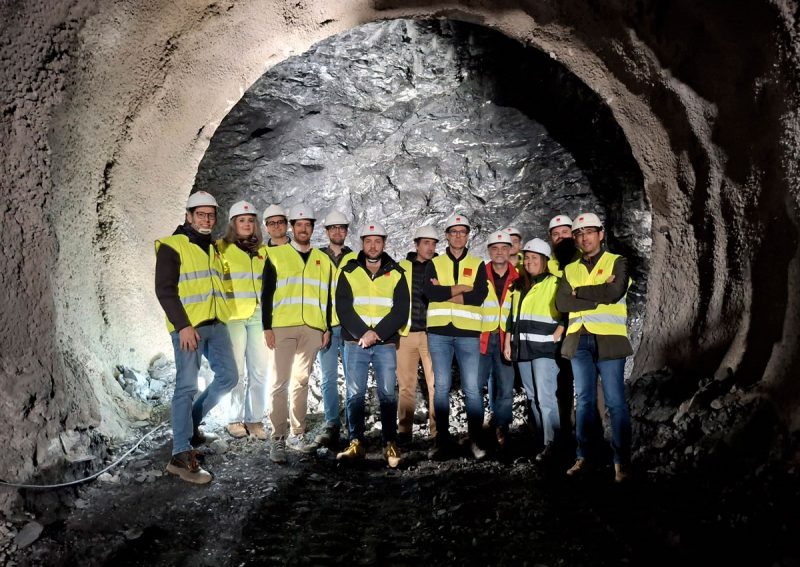
During the works, the support and waterproofing solution for both galleries was revised by:
- Replacing the planned system of traditional micropiles with self-drilling micropiles and extending their use to the full length of the galleries, including the junctions.
- Changing the waterproofing approach, adopting a 5.50 mm fire-retardant exposed waterproofing membrane, which is more suitable for a lining applied using shotcrete.
TYPSA is overseeing the modernisation of four tunnels on the A-7 in Granada, a €16.5 million project funded by NextGenerationEU
Compliance with state-of-the-art standards
Beyond the civil engineering works, the project stands out for the implementation of state-of-the-art technology in the refurbishment of the facilities, to comply with the provisions of Royal Decree 635/2006, the most notable improvements being:
- Control systems (SCADA) and communication systems: Installation of workstations for real-time control of all facilities, enabling faults to be detected and emergency plans to be activated immediately. Deployment of new equipment and data networks, providing dual redundancy and strengthening real-time communications between the tunnels and the control centre.
- Drainage: A dedicated collection system comprising a network of channels and retention basins has been installed to deal with any discharges or leaks of toxic liquids inside all the tunnels, thereby preventing environmental risks in the event of an accident.
- Pavements, signalling, aids to navigation and guardrails: All tunnels have been milled and resurfaced. Variable message signs, clearance control, signalling and road markings have been upgraded.
- Installations: Fire-resistant electrical and communications cabling, DALI-controlled emergency lighting and new hydrant networks have been installed and replaced in all tunnels. In particular, in Madroño and Acebuchal, CCTV with a DAI system, substations, generator sets, public address systems, linear fire detection, FM radio messaging, SOS posts and a mechanical ventilation and smoke extraction system using compact 37 kW Zitrón units have been installed, as there are clearance restrictions in these tunnels.
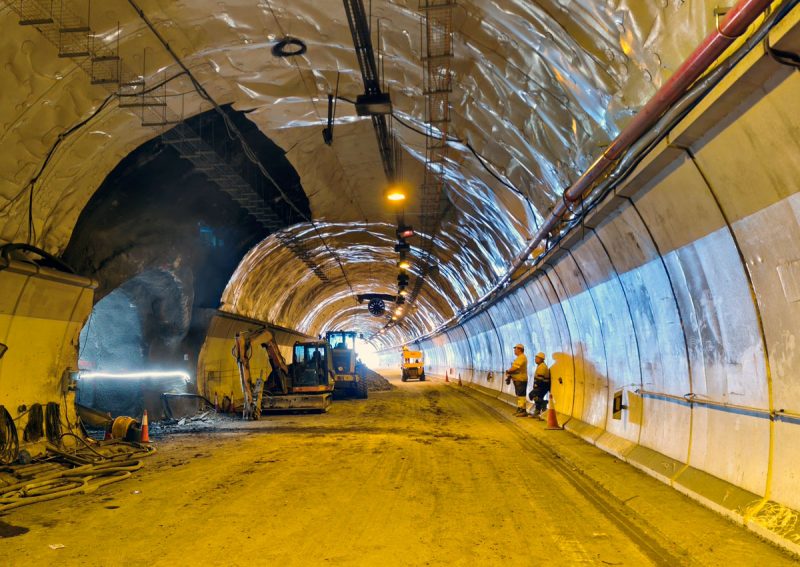
The human factor on site
The success of a project of this magnitude would not be possible without the work of the professionals on the tunnel site. During this critical phase, the commitment of Juan de Dios Cruz, Raúl Fernández, Francisco Aguilar and Juan Manuel Pérez within the support team utilised by TYPSA has been particularly noteworthy.
Work continues to progress at a good pace with the aim of completing this project imminently, which will significantly improve traffic flow and road conditions on one of the most important transport routes in the province of Granada and the country.
The project involves an investment of approximately 16.5 million euros, which has been financed by NextGenerationEU funds.