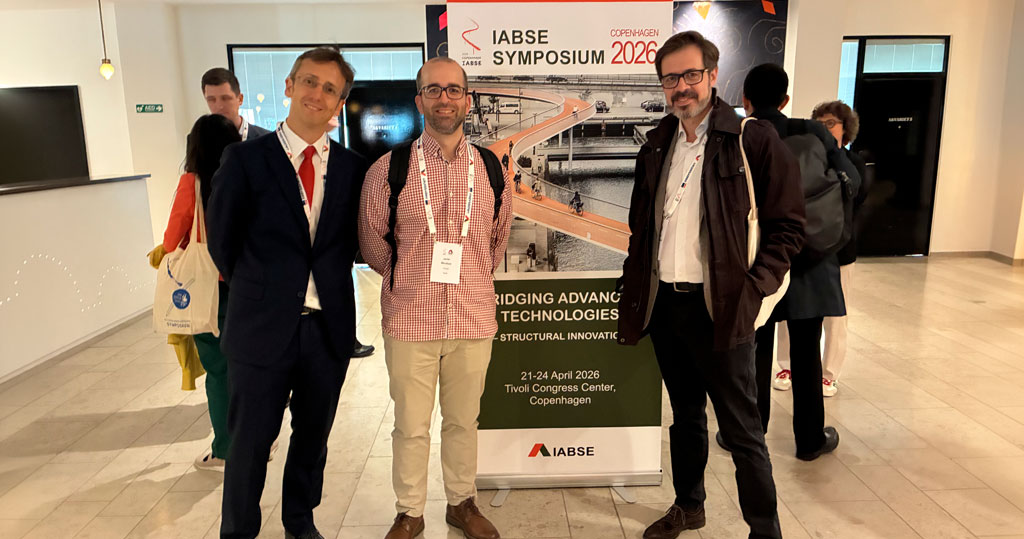
TYPSA took part in the IABSE Symposium 2026, held in Copenhagen from 21 to 24 April. It is regarded as one of the leading international events in the field of structural engineering, and this year’s event was held under the theme “Bridging Advanced Technologies – Structural Innovation”. This forum brings together experts, companies and academic institutions to analyse the most significant advances in the design, maintenance and upgrading of infrastructure.
TYPSA made a notable contribution to this prestigious conference with the technical presentation “Extension of the Service Lifespan of the Tárcoles River Bridge, Costa Rica”, prepared by José Luis Sánchez, Javier Mendoza and Fernando Cea.
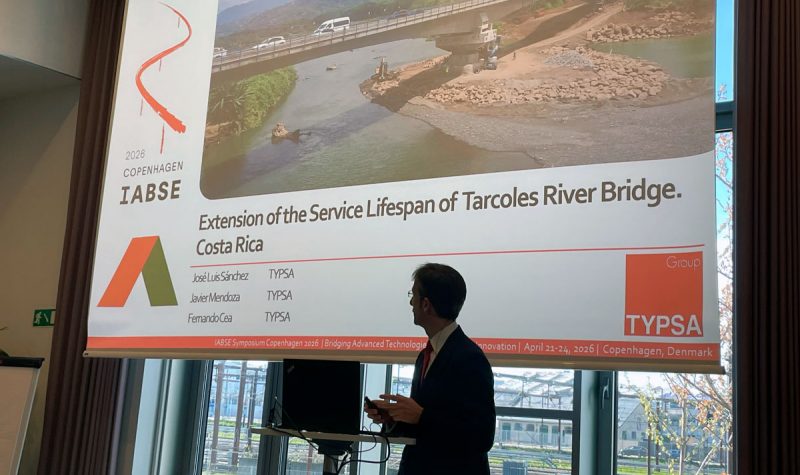
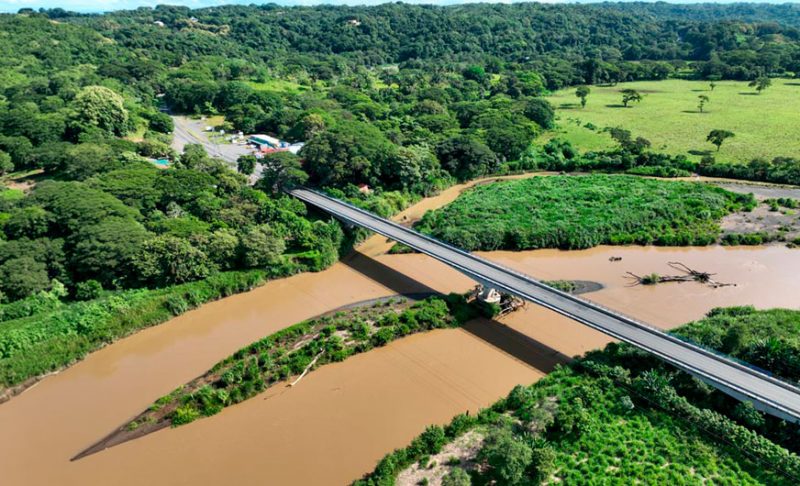
This project addresses the rehabilitation and service-life extension of the bridge over the Tárcoles River in Costa Rica, a strategic piece of infrastructure built in 1975, which forms a vital link between San José and the Pacific coast. After five decades of service, the bridge faces new challenges arising from changes in seismic regulations, increased traffic loads and the risks of erosion and scouring associated with the river.
The presentation demonstrates how it is possible to extend the service life of existing infrastructure through sustainable and technically advanced solutions, which also serves as a representative example of the challenges faced by numerous bridges built between the 1960s and 1980s in various regions of the world.
The analysis of the current condition revealed various significant defects, notably cracking in the piers, severe deterioration of the elastomeric bearings, and deficiencies in the drainage and waterproofing systems.
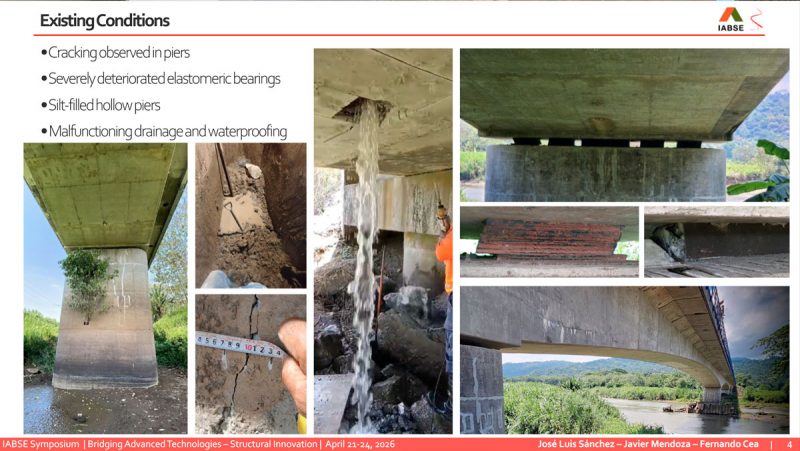
This detailed assessment enabled the formulation of an intervention strategy aimed at ensuring the safety, functionality and durability of the infrastructure, in line with current standards.
Comprehensive rehabilitation and reinforcement strategy
The solution developed by TYPSA is based on a combination of innovative measures, designed to specifically address the various deterioration mechanisms identified. One of the most significant aspects of the design is that it enables the structure to be adapted to current requirements without the need for extensive reinforcement of the existing foundations, thereby reducing costs, operational disruption and the environmental footprint.
One of the key elements is the implementation of seismic isolation systems by replacing the existing bearings with lead-core isolators. This measure significantly reduces the seismic forces transmitted to the structure, bringing the loads back to levels close to those considered in the original design.
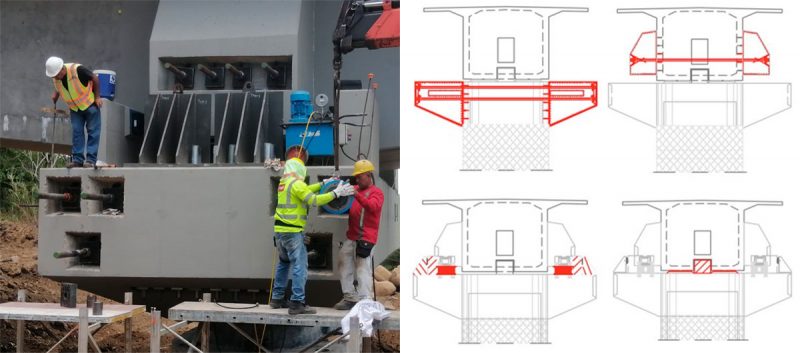
In addition, reinforcement works were designed for the piers, and the deck was rehabilitated using external post-tensioning. Another fundamental aspect is the reduction of the risk of scouring at the foundations, achieved by incorporating rigid inclusions around the piers and providing protection with breakwater.
The solutions adopted extend the bridge’s service life by more than 50 years, avoiding the need for complete replacement of the infrastructure and optimising available resources.
From a technical and economic perspective, the project stands out for its efficiency, as it focuses on selective interventions where they are necessary, reducing costs and minimising the impact on the bridge’s operational performance.
Furthermore, the proposal incorporates sustainability criteria, contributing to the circular economy by preserving the existing infrastructure and optimising costs throughout its life cycle.
TYPSA’s contribution to the field of rehabilitation engineering
TYPSA’s participation in the IABSE Symposium 2026 reinforces its position as a leading engineering firm in the field of structural rehabilitation and infrastructure resilience.
The River Tárcoles bridge project serves as a model for interventions in seismic and high-risk environments, providing innovative solutions that combine technology, sustainability and efficiency.
International forums of this kind enable the sharing of knowledge, the exchange of experiences and contribute to the advancement of the sector, in line with TYPSA’s commitment to technical excellence and innovation.