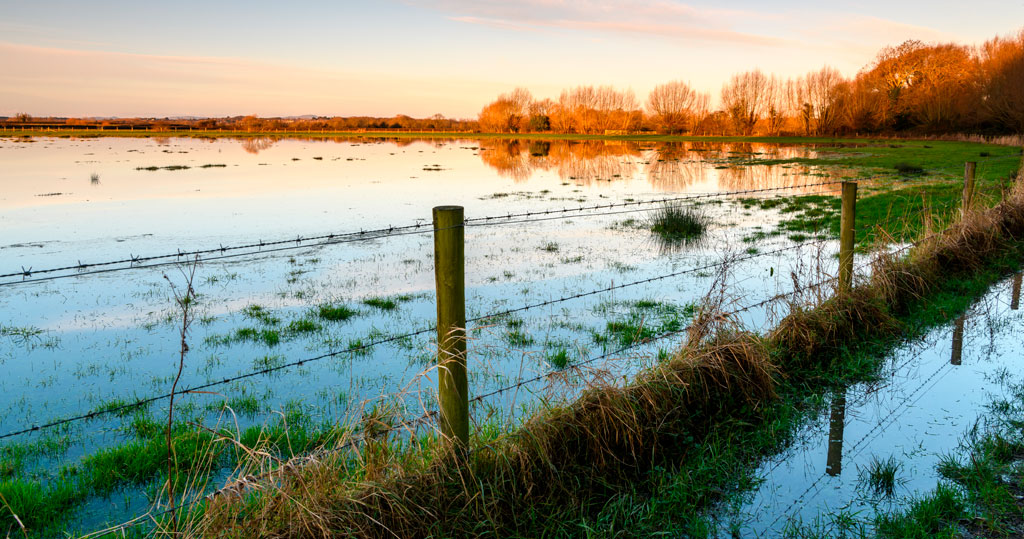
The series of storms that affected Andalusia in early 2026 lasted an exceptionally long time, more than a month and a half, with a succession of storms from early January to mid-February, including more than nine named storms. This episode, considered historic, persisted for more than six weeks with continuous rainfall until it subsided around 15 February 2026.
January 2026 was described as the wettest on record, with notable storms such as Kristin, Leonardo and Marta, setting historic rainfall records, exceeding 2,500 l/m² in areas such as Grazalema (Cádiz) within four months of the start of the hydrological year. The Grazalema watershed primarily feeds the Guadalete catchment and its tributaries.
These historically high levels of concentrated rainfall have resulted in a significant increase in inflows to reservoirs, mainly in the provinces of Cádiz and Málaga, where the Guadalete-Barbate River Basin District is located, as well as in Huelva and Almería. This situation has led to an extraordinary recovery in water levels, with reservoirs reaching nearly 92 per cent of their capacity. Across the Guadalete-Barbate River Basin District as a whole, a total volume of 1,420.95 hm³ has been recorded in reservoirs, representing an increase of 280.7 hm³ since the start of the storm.
The storm caused more than 13,600 incidents, with over 70 roads cut off at the height of the crisis. The persistent rainfall has led to rivers bursting their banks, flooding and significant damage to infrastructure and agriculture.
Apart from the heavy rainfall, the series of storms brought high-risk strong winds. The intense rainfall associated with the “atmospheric river” has led to over 10,000 emergency calls in the region of Andalusia, and more than 11,000 people have had to be evacuated from their homes
In the province of Cádiz, the overflowing of streams and rivers led to the evacuation of more than 2,000 people in rural areas of Jerez de la Frontera due to the swelling of the River Guadalete. The build-up of sediment and plant debris in the riverbeds has reduced drainage capacity.
Other towns in the Guadalete river basin were severely affected by the series of storms, such as Ubrique, where the urban section of the canal was completely overwhelmed and destroyed, forcing the evacuation of several neighbouring buildings.
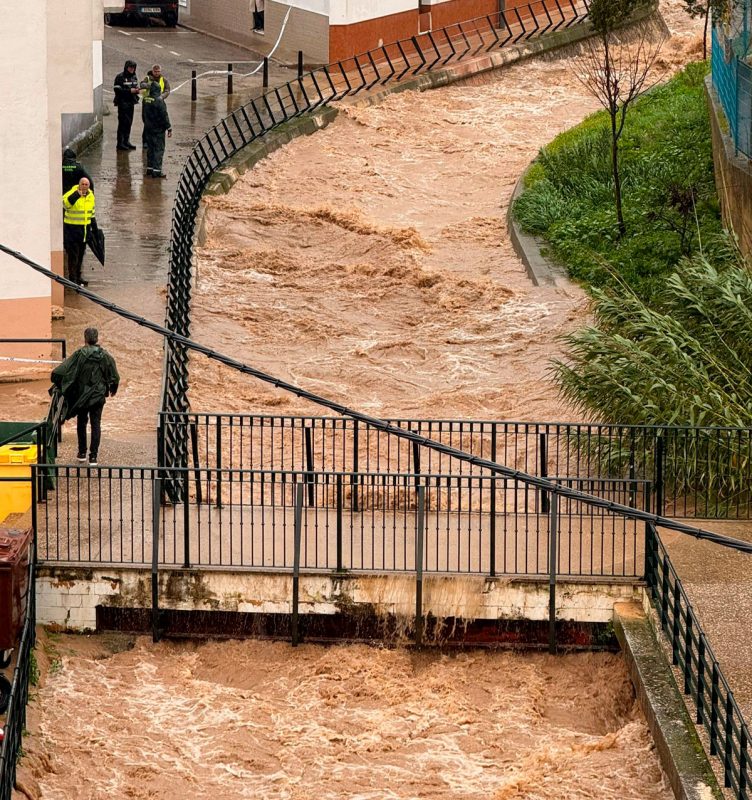
The urban section of the Arroyo Seco canal as it passes through the municipality of Ubrique during the series of storms
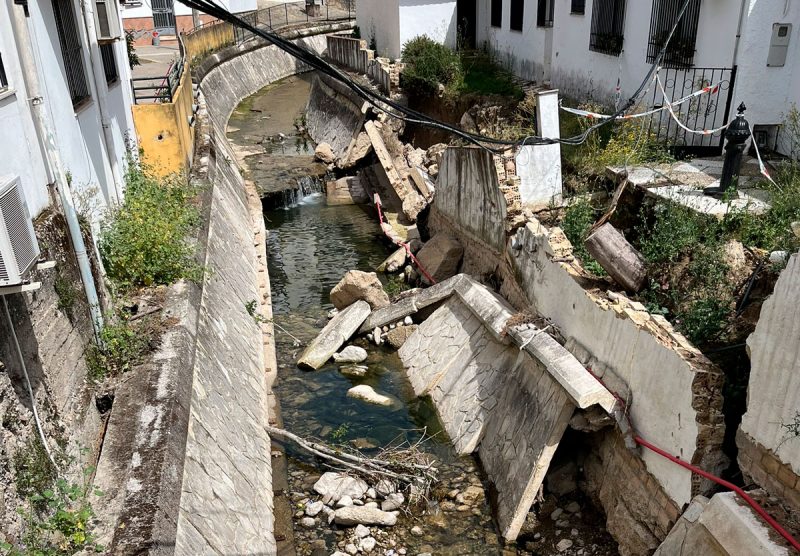
Condition of the urban section of the Arroyo Seco canal as it passes the Nursery School in the municipality of Ubrique
These rains also caused numerous incidents at the dams within the Guadalete System, which were forced to release water in order to maintain the hydrological safety of the infrastructure, as well as numerous incidents in the watercourses feeding the various reservoirs. Some matters of extreme urgency were resolved under the maintenance and upkeep contract for the dams within the Guadalete-Barbate River Basin District in the province of Cádiz, for which TYPSA was commissioned in a joint venture with AZVI.
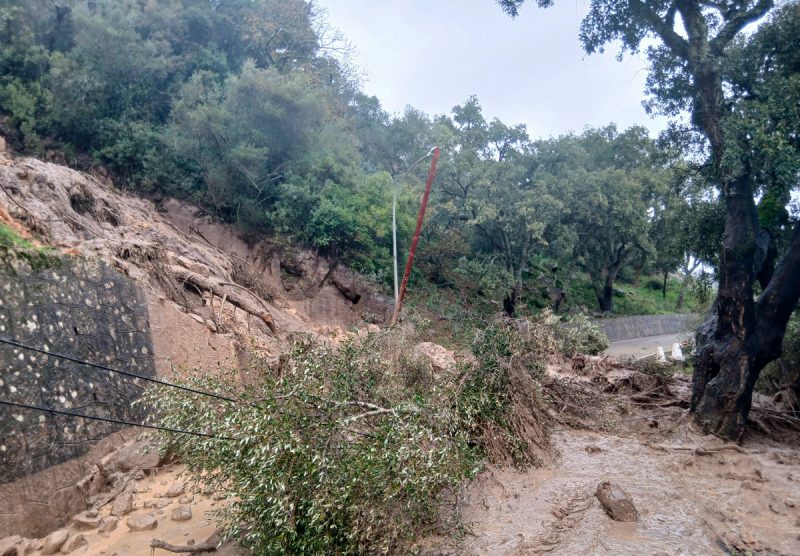
Access road to the crest on the right bank of the Los Hurones dam (Cádiz) during the series of storms
To mitigate these incidents, both the Directorate-General for Water Infrastructure and the Directorate-General for Water Resources of the Regional Ministry of Agriculture, Fisheries, Water and Rural Development of the Regional Government of Andalusia have awarded several lots of emergency works in Cádiz to enable the restoration and repair of those elements affected by the series of storms.
TYPSA has been awarded one contract for each of the emergency works put out to tender by both Directorates-General, specifically the following:
- Technical Assistance to the Works Management Team for the repair of damage caused to operational infrastructure by the series of storms that occurred between 10 November 2025 and 9 February 2026 in the “Guadalete” operational system (Cádiz)
- Technical Assistance for Project Management, Health and Safety Coordination and Environmental Monitoring in the emergency works carried out within the public water domain of the intra-regional river basins in Andalusia following the series of storms that occurred between 10 November 2025 and 9 February 2026 in the territory of the Autonomous Community of Andalusia. Province of Cádiz.
TYPSA has been awarded a contract by the Directorate-General for Water Resources to provide Project Management, Health and Safety Coordination and Environmental Monitoring for emergency works within the public water domain of the River Ubrique and Arroyo Seco in the vicinity of the municipality of Ubrique.
These works comprise, on the one hand, clearing of riverbeds and repairs to landslides within the riverbeds that have caused damage to infrastructure or pose a risk of landslides affecting neighbouring properties; and, on the other hand, the repair of the Arroyo Seco canal as it passes through the urban area of Ubrique, which caused significant damage to nearby infrastructure, such as the collapse of the protective wall at La Esperanza Nursery School.
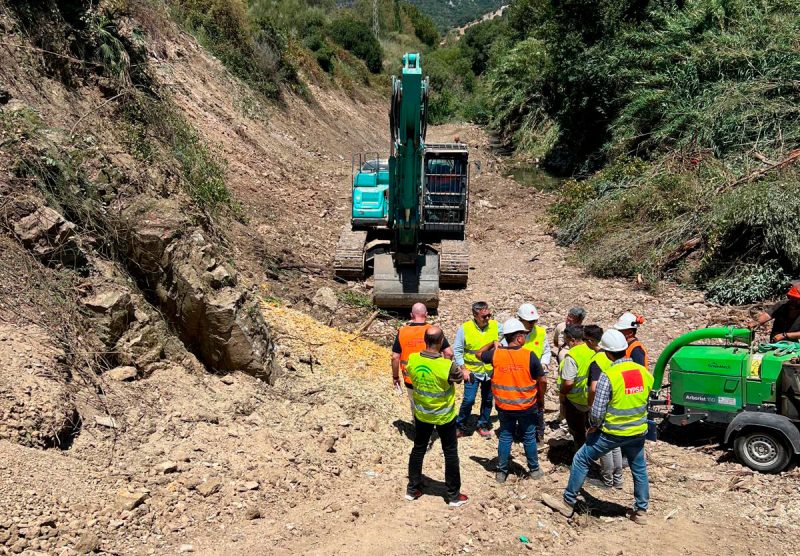
Visit by the Directorate-General for Water Resources to the landslide stabilisation works on the River Ubrique as it leaves the town centre of Ubrique (Cádiz)
TYPSA has been awarded the ATDO contract for two lots of works by the Directorate-General for Hydraulic Infrastructure. The first lot involves rectifying the damage caused by the series of storms to the dams in the Guadalete Water Supply System, namely the Los Hurones, Guadalcacín, Arcos, Bornos, Zahara-El Gastor and Azud El Portal dams.
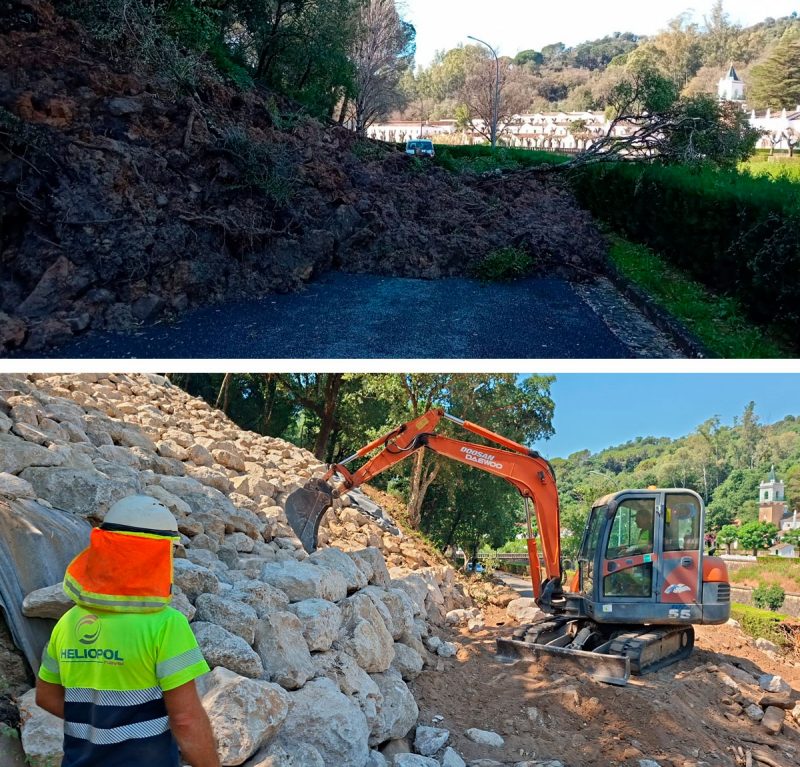
Landslide during the series of storms and repair work on the access road to the hydroelectric power station at the Los Hurones dam (Cádiz)
The works on these dams include repairs to landslides and damage to metal or concrete structures in the outlet area of the drainage systems, stabilisation of landslides at the access points to the various dam facilities, removal of trees felled during the storm, and dredging works to ensure the proper hydraulic functioning of the drainage systems.
The second contract package comprises repair works to landslide stabilisation structures and cleaning of the reservoir at the inlet and outlet of the Guadiaro-Majaceite transfer scheme.
The Guadiaro-Majaceite water transfer scheme is a key underground hydraulic project in Andalusia that connects the Mediterranean Basin (River Guadiaro) with the Atlantic Basin (River Majaceite, a tributary of the River Guadalete). It was developed in the late 1990s and its main function is to alleviate the water shortage in the province of Cádiz by diverting surplus flows from the River Guadiaro (a very rainy area) to the River Majaceite (a drier area). This transfer begins at Las Buitreras (Cortes de la Frontera) and, via a tunnel excavated using a double-shield tunnel boring machine, runs for 12.1 km in length with a usable cross-section of 4.20 m in diameter, emerging into the River Ubrique in the Garganta Barrida area (Ubrique).
This infrastructure is capable of transferring up to 30 m³ per second under free-flow conditions; this water is extracted from the unregulated River Guadiaro and stored in the Los Hurones Reservoir.
At the entrance to the transfer channel, the planned works include repairs to the control gates and cleaning of the weir that allows water to be diverted.
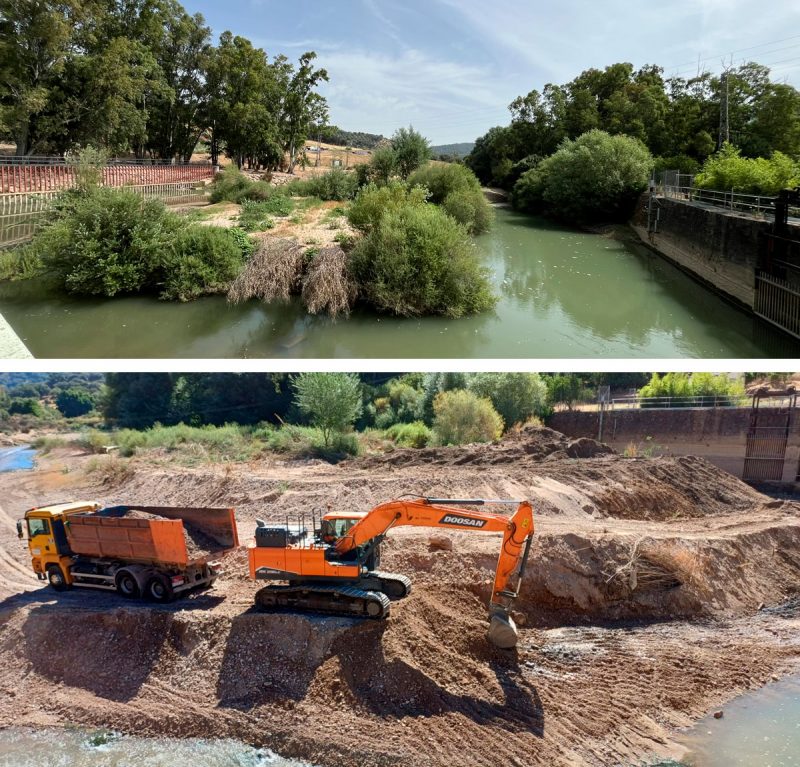
Inspection of the current condition and cleaning works on the reservoir basin of the Buitreras weir and the inlet to the Guadiaro-Majaceite diversion
At the outlet of this transfer, works are planned to stabilise the landslides caused by the combined flow through the Garganta de Barrida channel and the water transferred via the infrastructure.
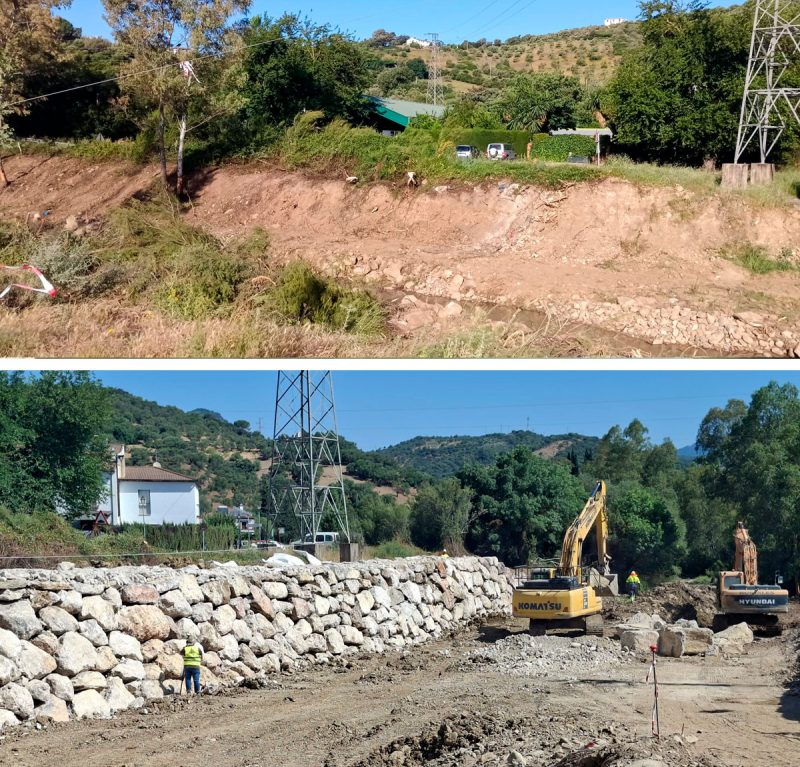
Landslide in the Garganta de Barrida riverbed near a high-voltage pylon and protective works to be carried out at the outlet of the Guadiaro–Majaceite water transfer (Cádiz)
This water transfer scheme came into operation on 27 November 2000 following seven years of construction work, involving the Southern Hydrographic Confederation (donor basin) and the Guadalquivir Hydrographic Confederation (receiving basin), under the auspices of the Ministry of Public Works, Transport and the Environment. Construction was awarded to the GUADIMA joint venture (comprising Dragados and FCC), whilst technical assistance was provided by TYPSA, bringing together again staff who had been involved in the construction of this infrastructure.
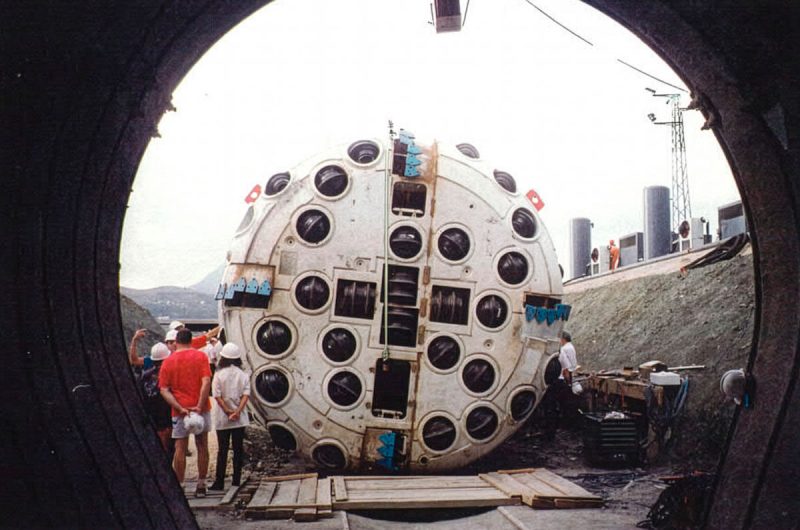
Construction work on the Guadiaro-Majaceite water transfer, for which TYPSA acted as the technical assistance provider (ATDO)
Although the completion deadlines for the aforementioned emergency works are set for the end of 2026 in one case and May 2027 in the other, the team comprising TYPSA staff has been working on defining the construction solutions to enable the completion of the stabilisation and repair works near the riverbed after the summer period and prior to the opening of the diversion, with the aim of ensuring that all issues are resolved in time for the upcoming rainy season.
These actions further consolidate the leading role that TYPSA has been playing in waterworks projects in Andalusia, across all aspects: design, works supervision, and maintenance and upkeep.