The Las Loras region is situated to the east of the Cantabrian Mountains, straddling the provinces of Palencia and Burgos. Within it lies the geopark of the same name, which has been included in the European Geoparks Network, established with the support of the European Union, in cooperation with UNESCO.
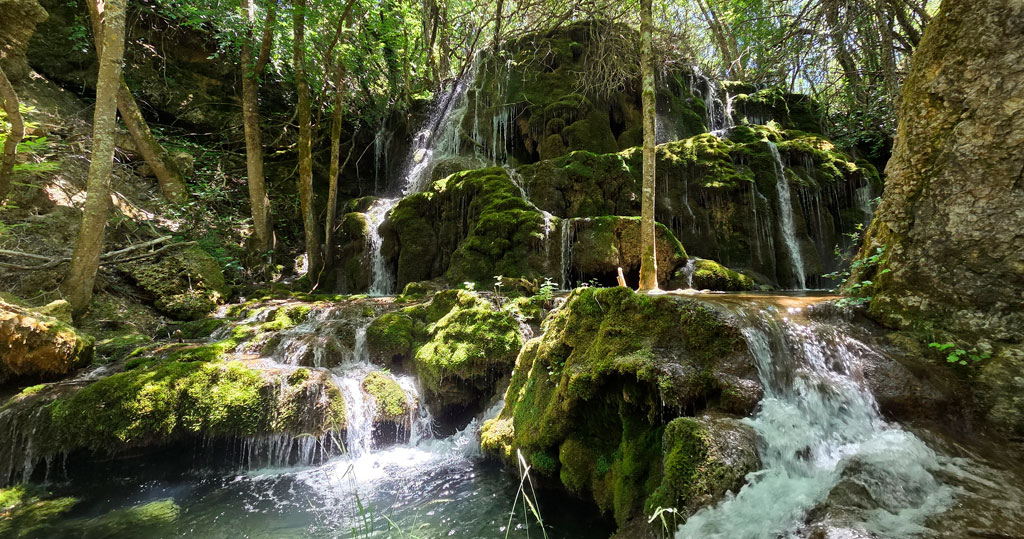
In Las Loras, water does not merely flow through the rock: it transforms it. As it emerges, it precipitates carbonate and slowly forms tuffs, waterfalls and petrifying springs. These are living, fragile landscapes, the balance of which depends on aquifer recharge, climate variability and land use.
TYPSA has carried out a hydrogeological study of the karst systems associated with the priority habitats of community interest 7220 ‘Petrifying springs with tufa formation (Cratoneurion)’ in the Las Loras Geopark, developing awareness-raising and climate change adaptation measures as part of a sustainable water management strategy. The project forms part of the Tourism Sustainability Plan for the UNESCO Global Geopark Las Loras, which is integrated into the Recovery, Transformation and Resilience Plan and receives financing from the European Union through Next Generation funds.
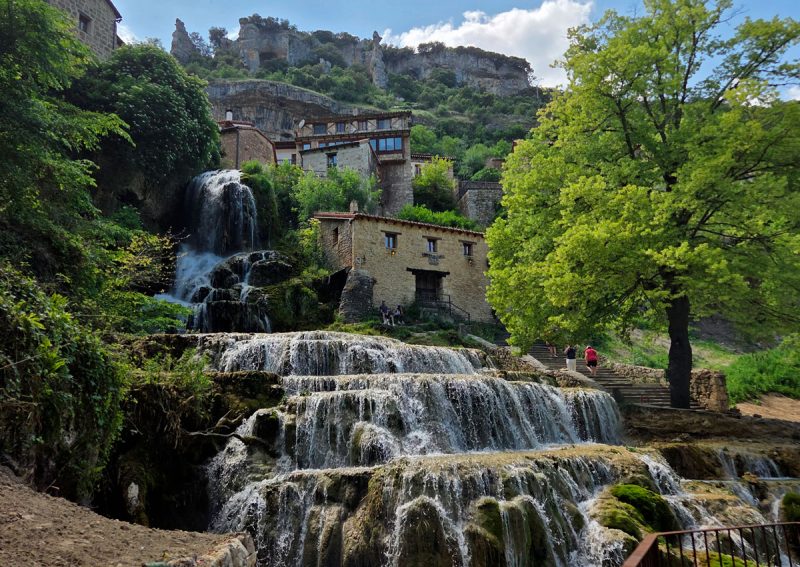
The technical core of the work has combined field surveys, flow measurements and the physico-chemical characterisation of the springs with geological, hydroclimatic and territorial analysis. The integration of this data has made it possible to review the conceptual model of how karst aquifers function, identify the factors controlling spring discharge and assess the vulnerability of tufa systems to potential changes in recharge and seasonal water availability. On this basis, monitoring, conservation and adaptive management measures have been defined, aimed at reconciling habitat protection, the needs of the local population and sustainable tourism.
The knowledge generated has already extended beyond the area itself, as the case of Las Loras has been presented at the Iberian Conference on Groundwater (CIAS 2026), and at the MASAR Al’an international school, linked to the UNESCO IGCP-730 project (Hydrogeological Significance of Mediterranean Geoparks), where the hydrogeology of Mediterranean geoparks was addressed as a basis for conservation, geotourism and local development.
In a landscape shaped drop by drop, understanding water also means preserving geological memory and anticipating the future of the region.