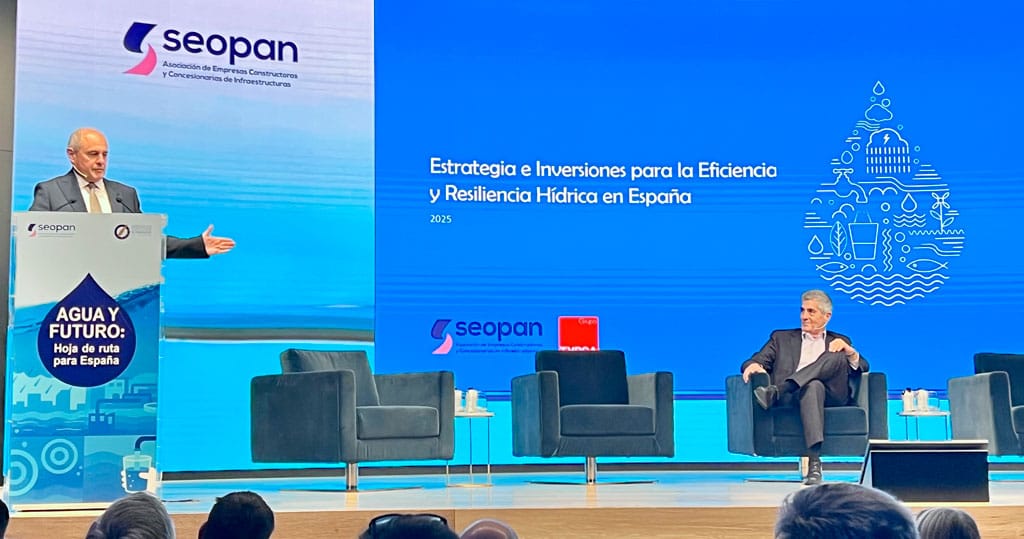
On 26th November 2025, the conference “Water and the Future: A Roadmap for Spain” was held in the El Beatriz Madrid auditorium. Organised by the Association of Construction Companies and Infrastructure Concessionaires (SEOPAN) with the Federation of Journalists’ Associations of Spain (FAPE), the meeting brought together representatives of the Government, companies, industry organisations, academics and the media to analyse the country’s water challenges in a context of increasing climate pressure.
Within this framework, TYPSA presented the report “Strategy and Investments for Water Efficiency and Resilience in Spain”, prepared for SEOPAN. The report sets out a ten-year technical-economic roadmap to strengthen water security, improve efficiency in water use and reduce the risk of floods. The document is based on the third-cycle hydrological plans and the Flood Risk Management Plans (PGRI) currently in force, integrating their measurement programmes and proposing additional actions.
The study concludes that Spain needs to mobilise 103,824 million euros in the period 2026-2035, approximately 10.4 billion euros per year, to guarantee supply and meet environmental objectives, while reducing the impacts of droughts and floods. Of this amount, 84.644 million are to meet demands and environmental objectives, and 19.18 billion to adapting to climate change and reducing the effects of floods. This large investment has been widely echoed in the economic press, with headlines that summarise the challenge as “104 billion in a decade to protect against droughts and floods”.
An investment agenda for water security
Part A of the report focuses on water demands and meeting environmental objectives. Based on a detailed inventory of conventional and non-conventional resources available, current and future demands, and the effects of climate change, a programme of 84,644 million euros is proposed, structured in five aspects:
- Knowledge and monitoring of the water cycle (2,769 MEUR), through the digitisation and real-time control of resources, consumption and losses, integrating meteorological and hydrological models, modernising Automatic Hydrological Information Systems (SAIHs) and taking advantage of advanced technologies and artificial intelligence.
- Adaptation to climate change: increasing resources and managing demand (10,933 MEUR), with a special focus on desalination, reuse and efficiency in irrigation, particularly in Mediterranean basins.
- Infrastructure for the urban water cycle (59,183 MEUR), aimed at complying with European supply and sanitation directives, increasing network renewal rates to at least 1% per year and adapting purification and supply to new Community requirements.
- Meeting environmental objectives in the Public Hydraulic Domain (4,112 MEUR), strengthening the means of administrations for the management, restoration and conservation of the public domain, and promoting green infrastructures.
- Investments in infrastructure within the framework of a National Water Agreement (7,647 MEUR), which includes the review and optimisation of existing transfers, the evaluation of new dams or regrowth, plans for the conservation and safety of dams, and proposals for the reform of the Water Law to coordinate hydrological, drought and flood plans.
Adaptation to flood risk and Mediterranean programme
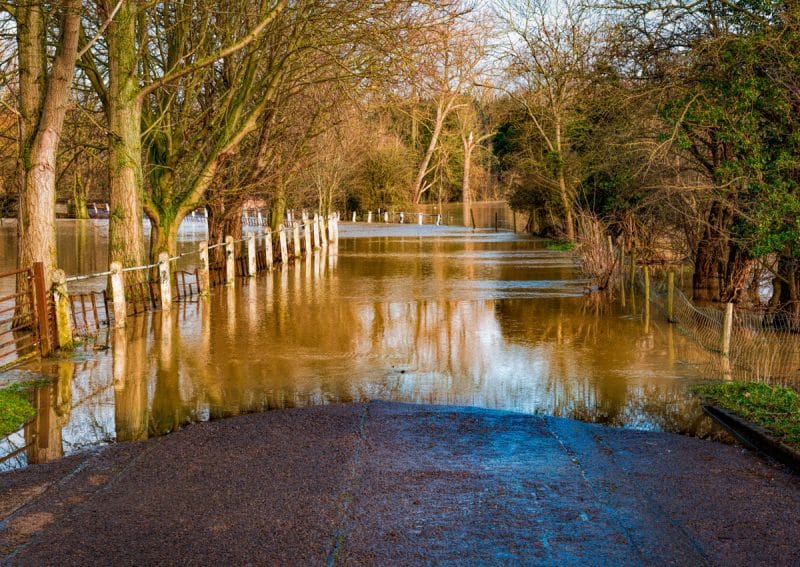
Part B addresses flood risk, building on the European framework of the Flood Directive and the second-cycle PGRIs (2022‑2027). The report reiterates that 2.7 million people live in flooded areas in Spain, with more than 473,000 in high-risk areas, and that the floods (“DANA”) of October 2024, with 235 fatalities and tens of thousands of people affected, has highlighted the urgency of a structural and integrated response.
For this area, a 19,180 million euro programme is proposed, focusing on:
- Sustainable urban drainage systems, storm tanks, lamination infrastructures and sanitation monitoring (9,443 MEUR), key to reducing damage in urban environments.
- Adaptation and modernisation of the existing dam system (4,644 MEUR), where 60% of large Spanish dams are over 50 years old, with priority given to expanding drains and improving safety.
- Structural flood protection measures (3,550 MEUR), such as pipelines, dikes and embankments in high-risk river and coastal stretches.
- Green infrastructures and actions to conserve riverbeds and coastline, hydrological forest restoration and river restoration (1,542 MEUR), integrating nature-based solutions into risk management.
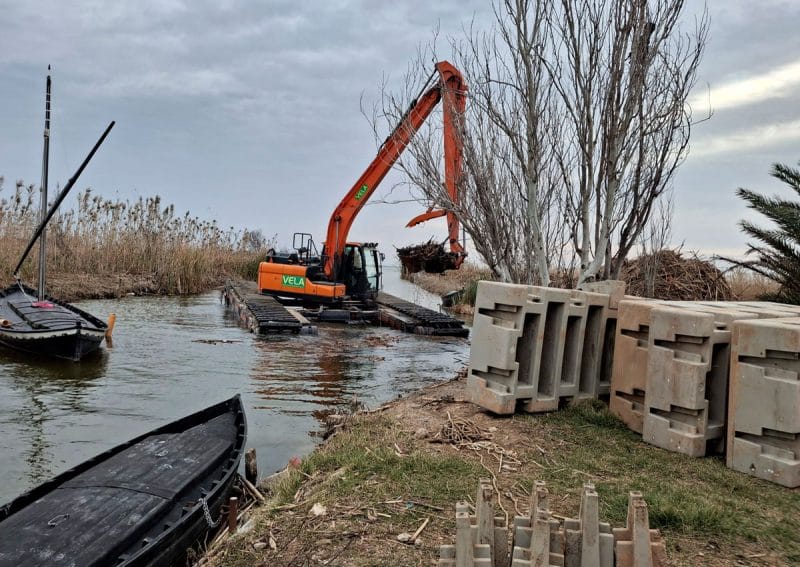
In addition, the report incorporates an extraordinary programme of 4,051 MEUR in the Mediterranean basins, with priority actions in the Bajo Turia, Bajo Júcar and tributaries, drainage improvements in linear infrastructures and reinforcement of dam safety in the areas most affected by the DANA of 2024.
Content of the conference “Water and the Future: A Roadmap for Spain”
The day was structured around three main blocks. Following the institutional welcome given by FAPE, the president of SEOPAN, Julián Núñez, emphasised the strategic nature of water for the country’s competitiveness and the need to address adaptation to climate change through long-term planning.
María José Polo, professor of Hydraulic Engineering and vice-rector for Scientific Policy at the University of Córdoba, then presented “Water and Water Resources. Evaluation of risks and impacts derived from climate change in Spain”, explaining the growing climate pressure on water resources and the importance of integrating science and public policy into decision-making.
The central block of the day was dedicated to the presentation of the report, by Miguel Mondria and Manuel Menéndez, from TYPSA, who detailed the methodology, the sources of information (hydrological plans, Flood Risk Management Plans, and their own analyses), together with the main conclusions in terms of investment, governance and prioritisation of actions. Their speech focused on three key messages: the need to recover investment in hydraulic infrastructures; the urgency to improve coordination between planning instruments; and the convenience of establishing a stable and specific financial framework for water.
The programme was completed with the round table “From Scarcity to Resilience: Problems and Solutions”, moderated by Alejandro Maceira (iAgua), in which representatives participated from AEDyR, FENACORE, SEOPAN and SPANCOLD, together with other organisations. The debate brought to the table the importance of desalination and reuse, the role of irrigation, the modernisation of the dam system and the deployment of nature-based solutions as pillars of water resilience.
TYPSA’s commitment to sustainable water management
With this work, TYPSA reinforces its role as a leading engineering firm in the field of water and the environment, providing an integrated vision that combines planning, infrastructure design, technological innovation and solutions based on nature. The report aligns with the Group’s commitments to sustainability and its contribution to the Sustainable Development Goals, in particular to SDG 6 (Clean Water and Sanitation).
The conference “Water and the Future: A Roadmap for Spain” and the publication of the report “Strategy and Investments for Water Efficiency and Resilience in Spain” are intended to serve as a technical basis for a broad debate between administrations, the private sector and civil society on a National Water Pact to plan, implement and finance the necessary actions with a vision of the country. The entire session can be watched again through the link provided by the organisation on its video channel as indicated below.
Link to Report: https://dlab.typsa.net/agua-y-futuro/libro.pdf
Link to Conference: FAPE-SOEPAN Conference: “Water and Future: Roadmap