December 2025 saw the inauguration of the underground pedestrian connection between the Alacant and Xàtiva stations of the Valencia Metro, owned by Ferrocarrils de la Generalitat Valenciana. The tunnel is 260 m long and 7.40 m wide, connecting pedestrian traffic between the two stations and improving connectivity within the Valencia metro network, functioning as an interchange between the lines that converge at both stations.
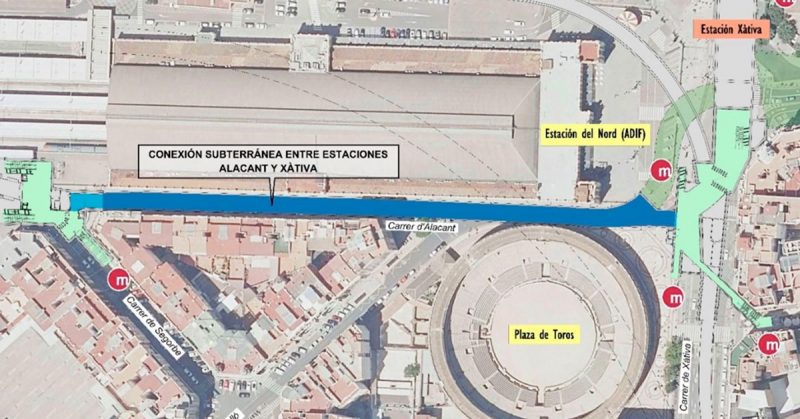 Location of the connection between stations
TYPSA participated in the drafting of the detailed design and in the construction management for this connection, which took more than seven years to complete. The tunnel was built using the cut-and-cover method, with excavation protected by reinforced concrete walls and closed by concrete slabs. Its interior houses both the pedestrian passageway and the facilities necessary for its proper functioning, including ventilation, communications, fire protection, accessibility, lighting, and smoke extraction equipment for the connected railway lines. Materials and finishes were chosen that are already commonly used in underground stations and buildings with similar characteristics, with proven suitability, functionality and easy maintenance, due to their anti-vandalism, durability and easy cleaning and replacement characteristics. The cladding is conceived as a transitional architectural feature, intended to emphasise spatial continuity and the connection with the station concourses. Similarly, the flooring and ceilings were designed using precise geometric modulation and orientation, designed to accompany and reinforce the directionality of the pedestrian route, emphasising its linear character.
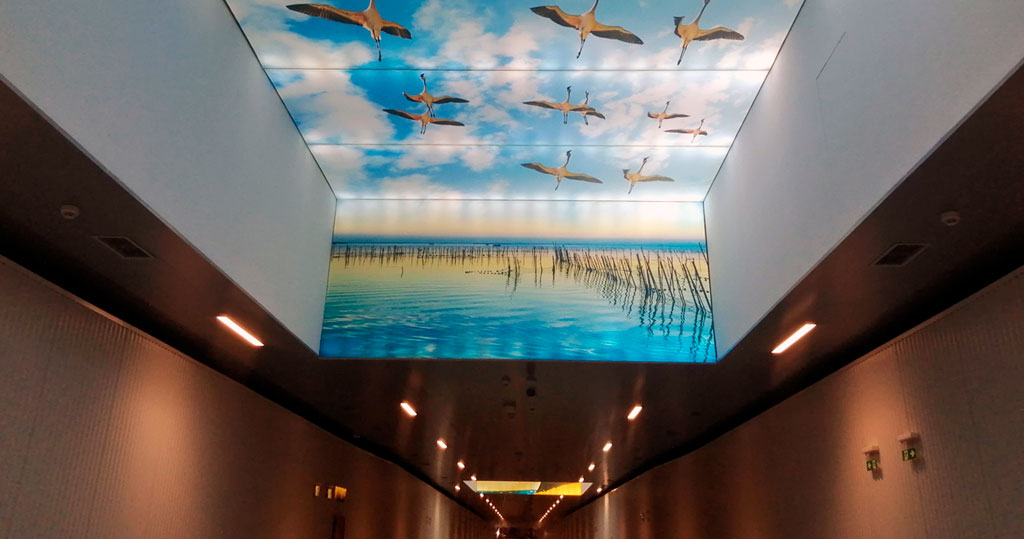
The potential monotony inherent in this type of infrastructure is neutralised by the incorporation of large light wells, which act as spatial landmarks and reference points along the route. These devices introduce colour and establish a visual relationship with the exterior, incorporating carefully selected panoramic views of the urban and regional landscape of Valencia.
The views are arranged according to the direction of the user, constructing a perceptual sequence linked to movement: towards the city centre, landmarks such as Valencia Cathedral, the Central Market or the Serranos Towers, evoking the iconic Luna de València, and towards the sea, contemporary and landscape landmarks such as the City of Arts and Sciences, the Turia Gardens, Malvarrosa beach and the Albufera Natural Park at sunset. In this way, the route transcends its functional condition to become an oriented spatial experience, in which architecture acts as a mediator between infrastructure and urban identity, inviting travellers to discover the city and project themselves towards it.
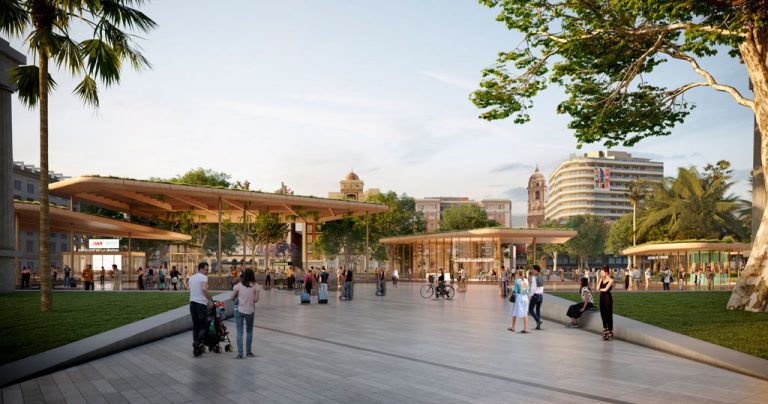
The work encompassed the redevelopment of the exterior of the Plaza de Toros (bullring), which in 1983 was declared a national monument and site of cultural interest in Valencia’s current general plan, dating from 1988.
This redevelopment has a marked representative character due to its location in the heart of the city, as well as being the antechamber to the bullring, which is why the design adopted for the repaving respects the original idea and layout based on circles and concentric lines directly related to the circular shape of the bullring, which enhances the monumentality of the building.
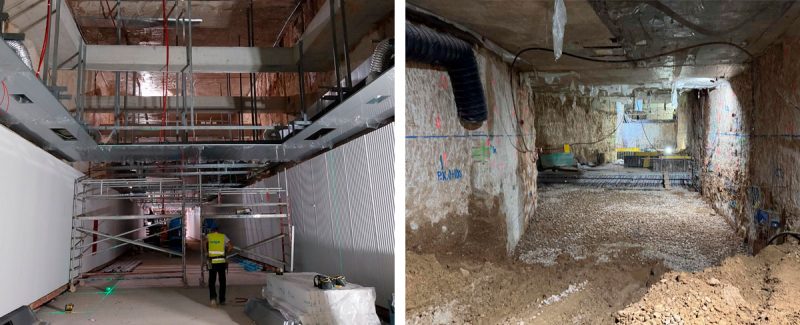 Construction of the pedestrian connection between stations
The design of the tunnel was developed to respond to two previously defined main scenarios: the current situation, characterised by the existence of a pedestrian connection between the station concourses, and the future situation, in which the continuation of line 10 on double track from Alacant station to the city centre is planned. In order to guarantee the functionality of the metro network in both scenarios, the infrastructure was designed and executed considering the specific constraints of each one. This approach involved numerous challenges in both the design and construction phases, for which appropriate technical solutions were adopted.
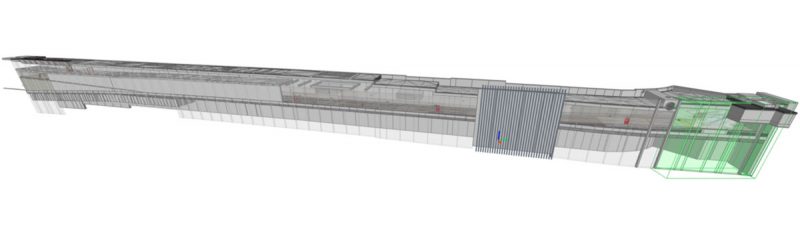 BIM model of structures and architecture, showing the depth of the screens and the micropile screen installed as additional protection for the Plaza de Toros
For example, the concrete screens were extended to the depth of the lower level of train traffic, their location on the ground plan respecting the future layout, and their calculation respecting the need for no intermediate levels of shoring for either the pedestrian tunnel or future rail traffic. Similarly, the resistant slab supports that can be removed later were omitted. Finally, fusible construction elements were used, designed for easy demolition in future change of use projects. In short, a project was designed and built to minimise the impact on neighbours, users of the facilities, property owners, designers and construction companies involved in the subsequent change of use.
During the design and construction of the connection, a number of external constraints were resolved, including:
- the presence of two cultural heritage sites (< 2 m) close to the route of the connection, namely the Estación del Norte railway station and the Plaza de Toros bullring in the city of Valencia. To reduce the potential impact on these buildings, the maximum permissible ground deformations on the outer face of the walls were limited, excavation methods that minimise deformations in the screens used, and passive protection with micropile screens installed in critical sections. The suitability of the designs and construction procedures were verified by a real-time monitoring campaign that controlled deformations in the ground and nearby buildings, as well as the condition of the slabs and structural walls.
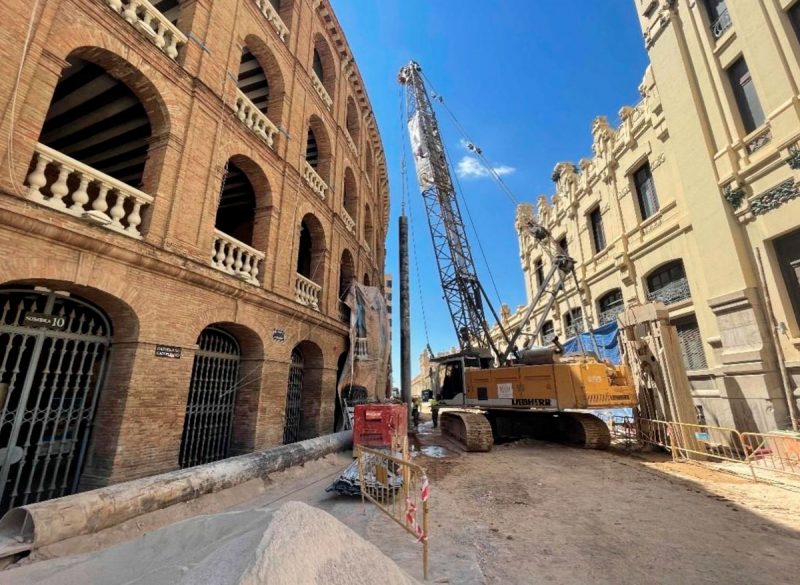 Installation of screens between protected buildings
- the existence of numerous pre-existing services that had to be diverted. The replacement of large-diameter sewage collectors (Ø 2000), water supply trunk pipes (Ø 600), main communication lines, gas and even historic irrigation ditches, such as the Rovella ditch, was coordinated. Many of the affected service companies took advantage of the replacement to modernise their facilities, and the work was coordinated with other nearby works and with events scheduled in the vicinity, such as performances in the Plaza de Toros, work restrictions due to crowds during local Fallas celebrations, etc.
- The decision to provide a dual pedestrian-tram connection, which was taken once the works had begun and part of the infrastructure had been built, required additional effort to redesign the work with significant geometric and functional restrictions, and required the reinforcement of part of what had already been built, all without slowing down the pace of the works.
Facilities
The pedestrian tunnel facilities between Alicante and Xàtiva stations were another of the most technically complex elements of the project, due to their length and because of their integration into a railway and urban environment in service, with a high density of pre-existing infrastructure.
The design and execution of the installations was carried out guaranteeing the safety, functionality, accessibility and comfort of users, complying at all times with the applicable regulations and technical criteria of Ferrocarrils de la Generalitat Valenciana, as well as with the requirements derived from railway operations.
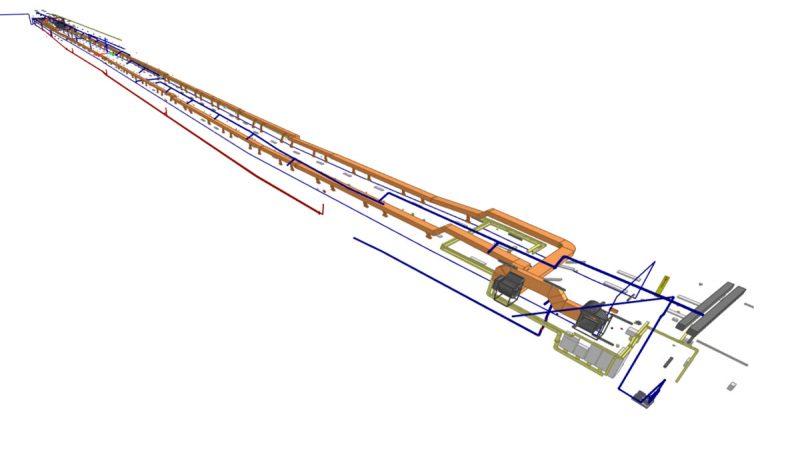 BIM model of the facilities constructed to provide services to the pedestrian tunnel
Drainage and sanitation
The drainage system for the pedestrian tunnel was designed to ensure the effective evacuation of rainwater and infiltrations, both inside the tunnel and in the areas connecting to the stations and the external urbanisation.
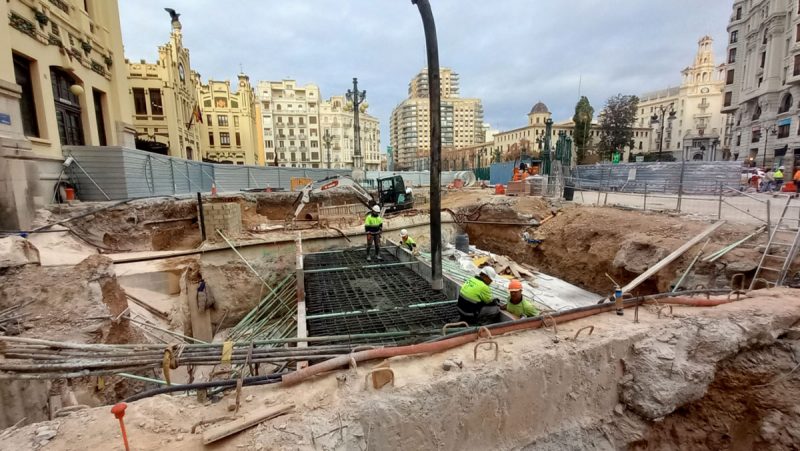 Concrete pouring phase of the section above the upper slab of the diverted Ronda Collector Tunnel
The system includes longitudinal gutters, drains and downpipes connected to a pumping system, with a repumping well located near the junction with the Xàtiva station. From this point, the water is pumped to the general surface drainage network via a connection pipe specifically designed for this purpose.
Likewise, the drainage systems in the urbanised areas of Calle Alacant, the bullring and its surroundings were adapted and replaced, ensuring proper integration with the existing municipal network.
Electrical installations
The electrical installations include both the low-voltage power supply and the necessary conduits for the medium-voltage line diversions, eight in total, guaranteeing the supply to all the systems in the tunnel and the connected stations, as well as to general-purpose services.
Distribution networks were installed using metal trays and specific conduits, with functional separation between power, lighting, communications and security systems circuits. The cables used are copper, low smoke emission and halogen-free, suitable for installation in underground public infrastructure.
The lighting system was implemented using high-efficiency LED luminaires, providing light levels in accordance with current regulations and reinforced by self-contained emergency lighting, powered by backup systems.
Ventilation and environmental control
The pedestrian tunnel has a ventilation system designed to ensure adequate health and comfort conditions during normal operation, as well as to facilitate smoke extraction in emergency situations.
The system is integrated with the station ventilation installations, including ducts, dampers and control elements, and has been dimensioned considering the different operating scenarios envisaged in the project and its subsequent modifications.
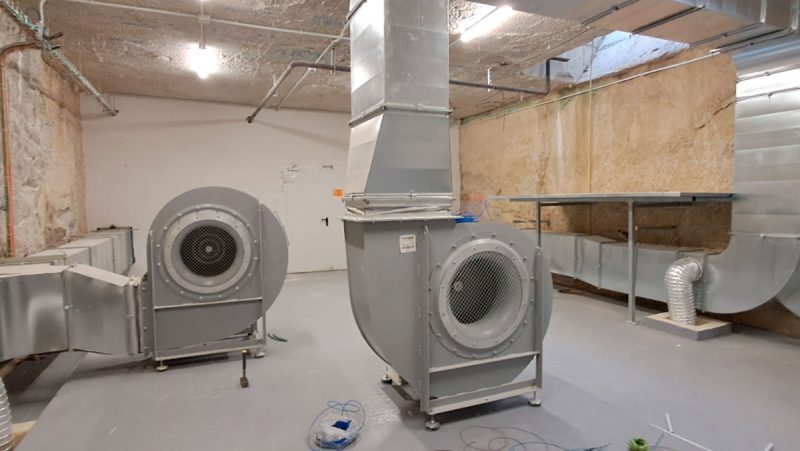 Two of the four fans installed in technical lofts for air renewal in the tunnel
Fire protection
Fire protection was covered through a set of active and passive installations that enable detection, control and safe evacuation of users. Among other elements, these include detection and signalling systems, compartmentalisation using automatic smoke control curtains, active protection installations and their integration with the general station systems ( ). All of this was designed in accordance with current regulations and the specific criteria applicable to underground railway infrastructure.
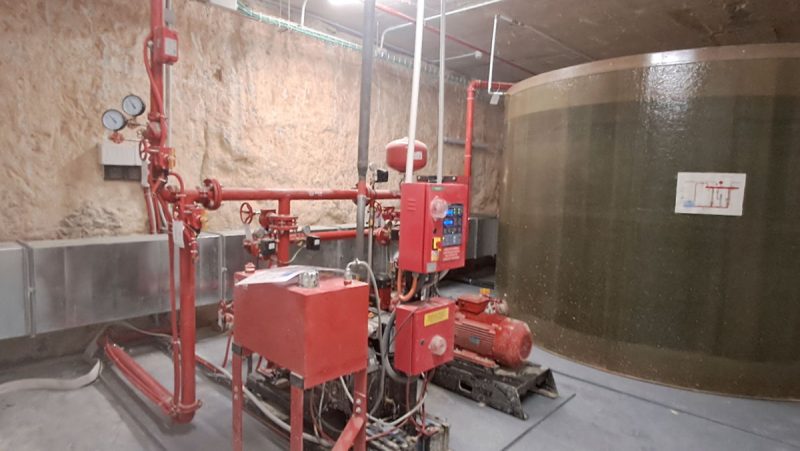 New pressure unit for the fire hydrants installed along the Cañón
Communications and special systems
The replacement of the communication installations affected by the work required intensive coordination with the existing service companies, given the presence of multiple telecommunications networks in the area of operation. During the execution of the works, various fibre optic cables and conduits were identified, protected, diverted or replaced, ensuring the continuity of the affected services at all times.
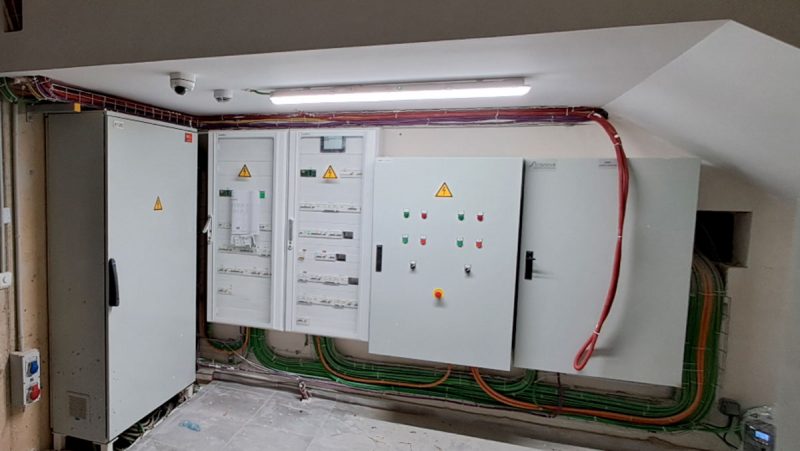 Protection, control and communications panels in the technical room on the Xàtiva side
The final result integrates the new tunnel facilities with the existing railway and urban communications networks, without interfering with operations.
Vertical transport systems
To ensure universal accessibility and facilitate user mobility between the different levels of the pedestrian tunnel and Xàtiva station, a lift and an escalator were installed in accordance with regulations.
The lift installed is electric with traction machinery, equipped with automatic rescue systems in the event of power failures and two-way communication with the control centre. The cabin complies with universal accessibility requirements, including visual and audible signage, Braille buttons and dimensions suitable for users with reduced mobility.
The escalator has active safety systems, including obstacle detection, emergency stop and soft start, ensuring comfort and safety under normal operating conditions. Both the lift and the escalator are integrated into the general infrastructure control and maintenance system, allowing continuous monitoring and control from the control room and efficient incident management.
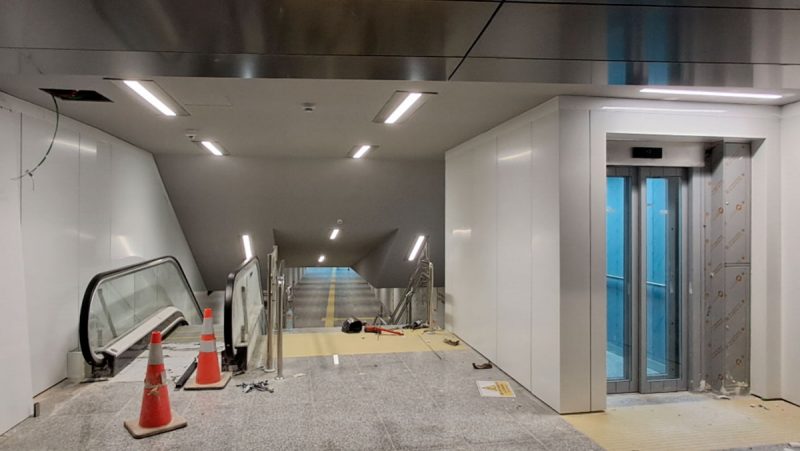 Final stages of commissioning and adjustments to the escalator and lift connecting Xàtiva and Cañón
Integration and commissioning
All the installations were integrated in a coordinated manner with the civil works and architectural finishes, being concealed or integrated into false ceilings, cladding and technical rooms, facilitating their maintenance and operation.
Prior to the commissioning of the pedestrian tunnel, the necessary checks and verifications were carried out to ensure the correct functioning of the various systems, culminating in its commissioning in safe and reliable conditions.
The works were inaugurated in December 2025 by the President of the Valencian Regional Government, Juan Francisco Pérez Llorca.
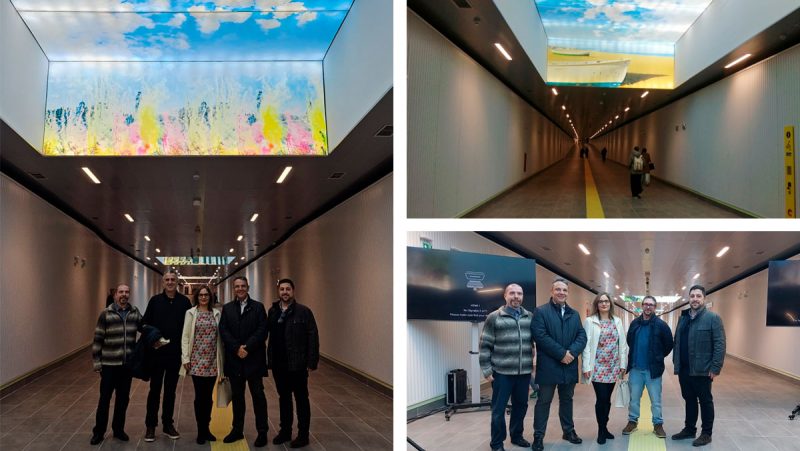 Inauguration of the pedestrian connection between Alacant and Xàtiva stations. Valencia Metro