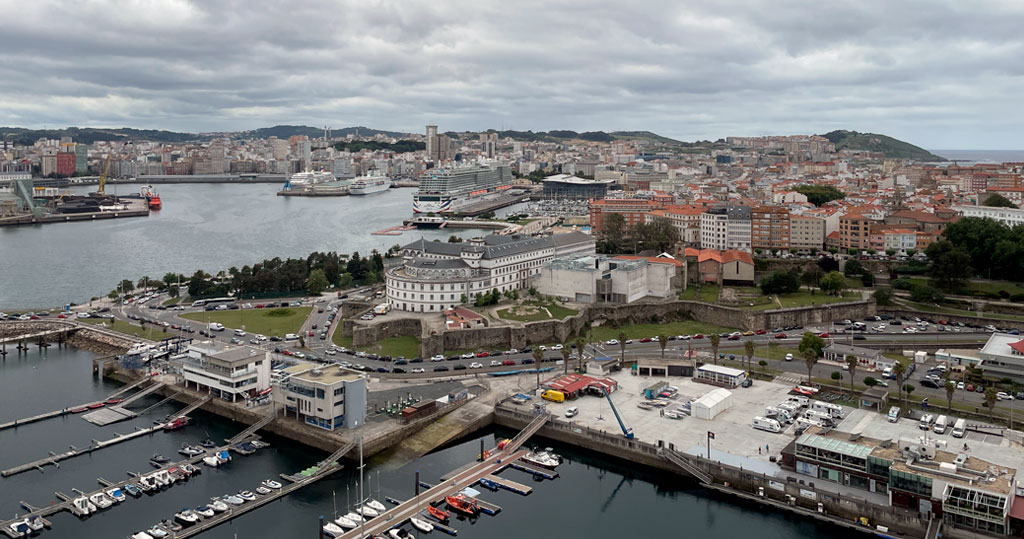
At TYPSA, we are fortunate to be involved in projects capable of transforming people’s lives. Few professional activities offer such a privilege: to help imagine how we will live in our cities over the coming decades and to help make these places better places to live, work, travel around, meet up and enjoy.
There are projects which, as professionals, excite us because of their complexity; others, because of their significance; and very occasionally, one comes along that combines both: Coruña Marítima is one of them.
The selection of our team for the second phase of the international tender to prepare the Coruña Marítima Master Plan is a source of immense satisfaction and, above all, an opportunity to contribute to one of the most significant urban transformation projects our country will undertake in the coming years.
Following an initial phase in which fourteen top-tier national and international entries took part, our team has been selected as one of the five finalists who will compete to draw up the Master Plan. We are doing so alongside some exceptional partners: the prestigious international practice RSHP, Monteoliva Arquitectura, and with the collaboration of EOSA and EJASO. The quality of the selected proposals reflects the exceptionally high standards of the tender competition and makes this achievement all the more meaningful to us.
I believe that one of our team’s main strengths lies precisely in the combination of our capabilities. TYPSA brings extensive experience in engineering, architecture, urban development, mobility, sustainability and planning, gained through projects carried out all over the world. RSHP brings a leading international track record in the design of large-scale urban developments and waterfronts. Monteoliva Arquitectura completes the team with an in-depth understanding of the city, its identity and its urban reality.
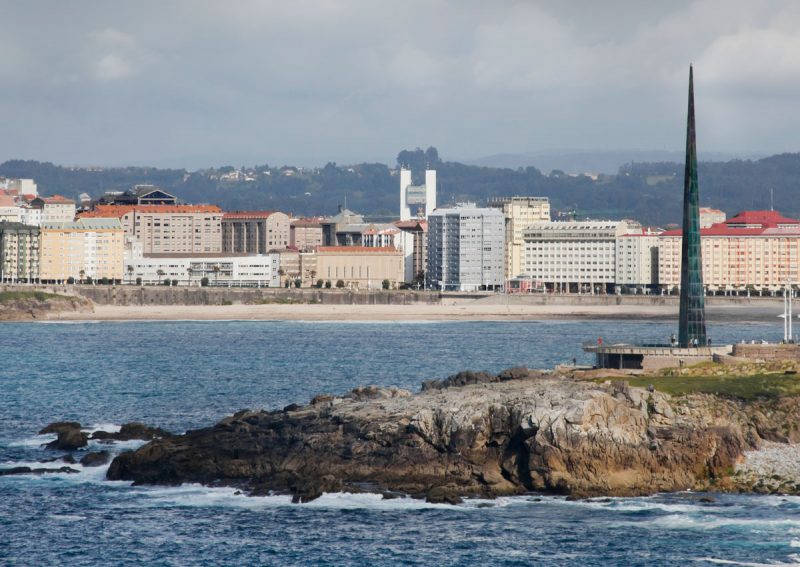
TYPSA’s office in A Coruña is playing a key role in developing the proposal, working closely with professionals from the company’s other offices and with our international partners. This collaboration reflects the way we approach major projects: bringing together diverse skills, perspectives and experiences to build a shared vision.
The combination of an international vision, a multidisciplinary approach and solid local knowledge enables us to tackle a challenge of this complexity from an integrated perspective, where technical excellence and sensitivity to the area go hand in hand. I am convinced that the best cities are built when international experience and in-depth knowledge of the location work together.
This balance between the global and the local also reflects the way we understand our work. At TYPSA, we take part in projects every year that improve people’s lives in cities around the world. Whether in Bangladesh, Saudi Arabia, Peru, the United Kingdom or Spain, the aim is always the same: to help create more liveable, more sustainable places with a better quality of life for those who use them every day.
However, every now and then a project comes along that feels different. A project set in the city where you were born, where your family still lives, or where you hold childhood memories. We work to improve cities all over the world, but when the city you’re trying to improve is the one that, in some way, also shaped who you are, that commitment takes on a different meaning.
That is precisely the enthusiasm with which many of our colleagues in A Coruña and other TYPSA professionals from the city are approaching this project. Among them are Iria Herranz, David López Rivas and Alfonso Suárez Seoane, whose dedication, knowledge of the city and enthusiasm have been fundamental from the very start. They know A Coruña because they have lived there, because they feel it is their own, and because they want to help ensure that future generations can enjoy an even better city. That personal connection brings a sensitivity that is hard to replicate and is, without a doubt, one of our greatest assets.
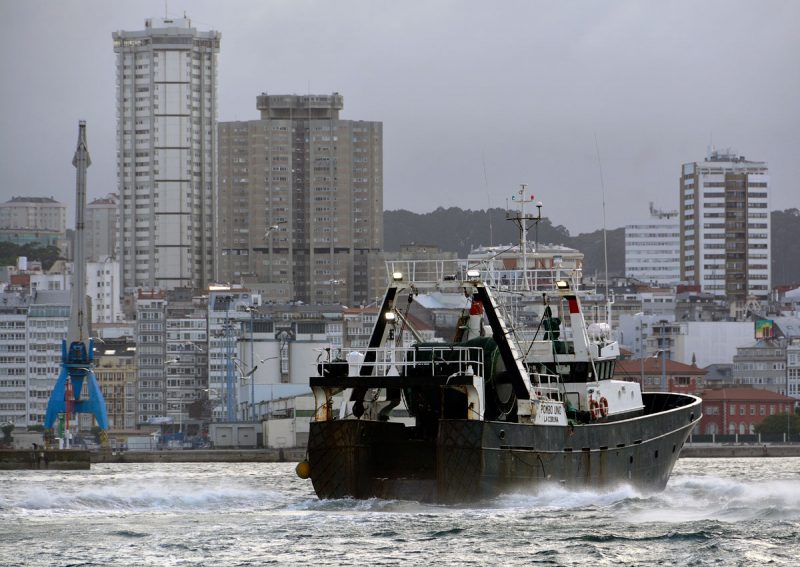
Ultimately, our work goes far beyond drawing up a plan or designing a space. We design the settings where people’s everyday lives unfold: where we live, work, study, go for walks, play sport, meet up with friends or watch our children grow up. Having the opportunity to improve these places, making them more accessible, more sustainable, more welcoming and more human, is a huge responsibility, but also one of the greatest privileges of our profession. We do not design cities; we design the places where people’s lives unfold, and few responsibilities can be as exciting as that.
Being shortlisted for this second phase is a source of satisfaction, but it also marks the start of the truly important work. We are competing against extraordinary teams, and we know that true success will not lie in having reached this stage, but in being able to present a proposal that meets the aspirations of A Coruña and helps to build a better city for those who will live there over the coming decades.
We approach this challenge with a conviction we share at TYPSA: the best projects arise from listening to and understanding the place for which they are designed. Our international experience enables us to offer a broad and well-informed perspective, but we are equally aware that every city is unique and must shape its own future. Our aim is not to transplant solutions from elsewhere, but to contribute, alongside the institutions and the people of A Coruña, to imagining the best possible A Coruña for future generations.
We would not wish to conclude without remembering someone for whom this project also held a very special significance: Pablo López Fuentes, who for many years was the director of TYPSA’s office in A Coruña. From the very beginning, he followed the development of Coruña Marítima and shared our hope that one day we might be able to play a part in this transformation. Unfortunately, he was not able to live to see it.
Those of us who were lucky enough to work with him feel that a part of this journey also belongs to him. We will tackle this challenge with his memory very much in mind and with the desire to live up to the commitment, the love for A Coruña and the approach to our profession that he always instilled in us. This work is also, in a way, a tribute to his legacy.