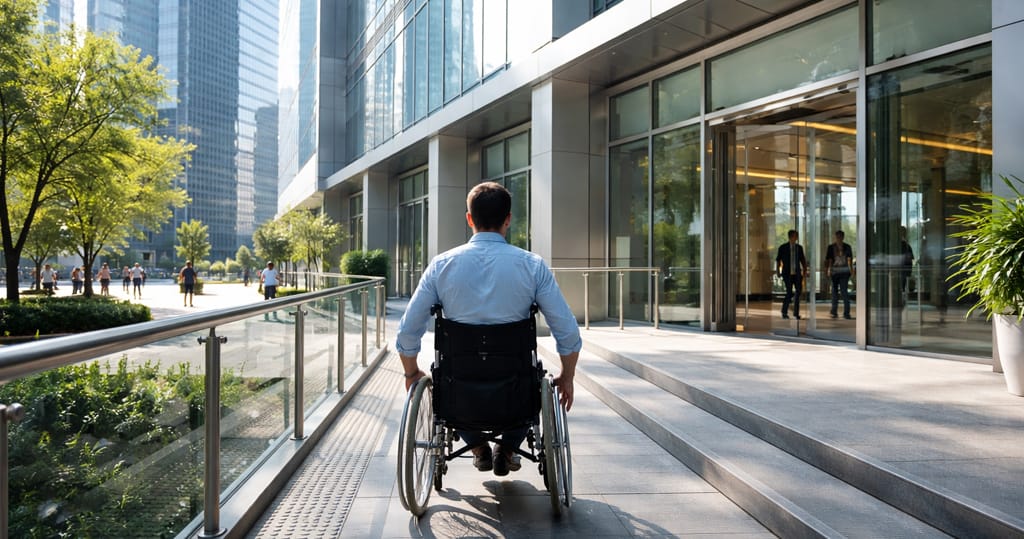
In a world moving towards total inclusion, accessibility is no longer just a regulatory obligation but has become an ethical and strategic commitment. At TYPSA, we understand that the excellence of an asset is not only measured by its height or design, but also by its ability to accommodate everyone with the same safety, comfort and autonomy.
A major milestone for the TYPSA Group
2025 has been a key year in our history. TYPSA has successfully completed its first two AIS accessibility certifications in two of the most emblematic assets on the Spanish skyline, both owned by the Grupo Emperador:
- Diagonal One Tower: A symbol of innovation on Barcelona’s seafront.
- Emperador Castellana Tower: An icon in Madrid’s Four Tower complex.
 Diagonal One Tower (Barcelona) and Emperador Castellana Tower (Madrid)
In both cases, the common areas for public use were analysed, applying the Certification protocol and the Built Environment modality prior to 2010.
However, our commitment to accessibility is not new. Since 2020, TYPSA has been working closely with the Foundation for Accessibility and Social Responsibility (ARS). We were one of the first companies to become an Authorised Entity, integrating certified technicians into our team who are capable of implementing this system with rigour and a vision for the future.
This effort is directly aligned with our contribution to the Sustainable Development Goals (SDGs), ensuring that diversity (physical, sensory, cognitive and digital) is the backbone of our projects.
What does the AIS certification consist of?
The certification process for an asset begins by requesting the opening of a file with the Foundation. Once the beneficiary entity has paid the corresponding fees, the application is enabled and the certified technician can carry out visits to the asset.
During this phase, the approved technician carries out exhaustive and rigorous data collection, applying their technical criteria and specialised knowledge to gather measurements, evidence and key observations that go beyond mere regulatory verification. This on-site work is crucial, as it allows for the identification of the asset’s strengths, weaknesses and real opportunities for improvement in terms of accessibility.
Subsequently, in the office, the approved technician critically analyses all the information collected and prepares the Accessibility Study, a technical report that includes specific measures and recommendations aimed at helping the entity achieve the best possible result in terms of accessibility. This study is audited by a technician from the Foundation to ensure maximum rigour, consistency and transparency in the certification process at an international level.
Once this process is complete, the report is submitted to the Adjudication Committee and the Foundation issues the official certificate accrediting the degree of accessibility achieved (from one to five stars), indicating its period of validity and offering the beneficiary organisations different types of plaques.
Making the invisible actor visible
Accessibility is the invisible asset that generates the greatest visible impact, which is why every year the ARS Foundation organises an annual event that brings together all authorised entities to review the most important milestones of the year and share knowledge on accessibility.
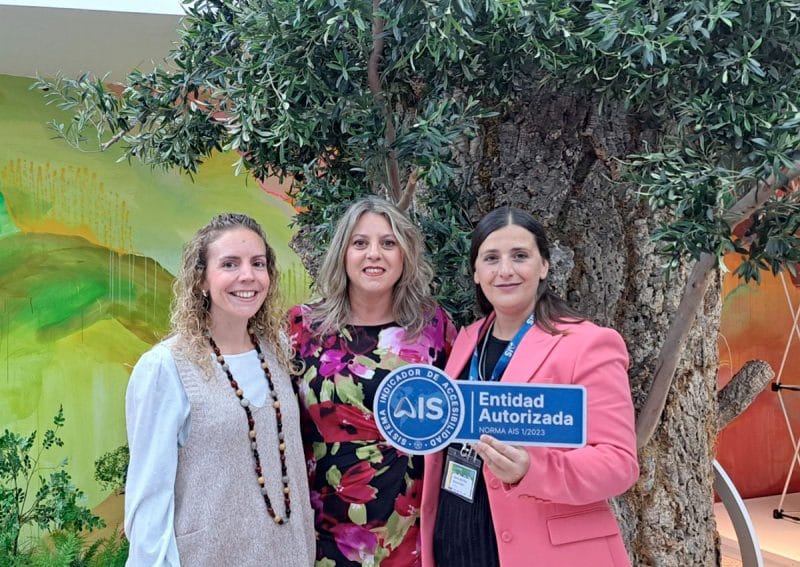 Alba Moreno (TYPSA: architect and certified technician), Esther Bienes (president of the ARS Foundation) and Pilar Blasco (TDS: director of development of the AIS application)
On 23 October 2025, the Emperador Castellana Tower Showroom was the venue for this meeting, during which our colleague Alba Moreno (architect and certified technician) voiced our commitment to social responsibility by participating in the round table discussion: “The importance of defining scope”. The event also served to celebrate TYPSA’s key role in the development of the AIS PPP, which has optimised working times and improved the flow of information between the Foundation and the authorised entities.